Object hallucination remains a persistent reliability issue in large vision-language models, where generated object mentions may sound plausible but lack visual grounding. Recent training-free detectors use internal signals such as token likelihood, attention, visual confidence, or image-text similarity to identify hallucinated objects. These signals are useful, but they are often source-confounded. They measure how strongly an object is supported inside the model without distinguishing whether that support comes from object-specific visual evidence or the generated text prefix. In difficult cases, a hallucinated object can still receive high internal support because it fits the scene, is associated with nearby visual cues, or follows naturally from the generated text prefix. We propose VisER, a training-free two-sided metric for object-level hallucination detection. VisER evaluates each generated object mention from two complementary views. Visual Evidence measures whether object-context compatibility is backed by object-specific evidence from image tokens. Visual Reliance measures whether the object is supported more by the image than by the generated prefix. Combining these views gives a more source-aware grounding score, while avoiding additional object-level verification generations. Across multiple LVLMs and benchmarks, VisER improves AUROC and AUPR over a range of baselines.
Afsaneh Hasanebrahimi, Hanxun Huang, Christopher Leckie et al.· 0 citations
Strategic deception by LLM and VLM agents has emerged as a central AI alignment and safety concern. Social-deduction games (where each player holds a hidden role and communicates with others to deduce identities) serve as the canonical testbed, particularly in multi-agent settings. Existing testbeds, however, are text-only and run on a single fixed agent configuration, missing the non-verbal sensorimotor channels treated as core by deception taxonomies and leaving it ambiguous whether an observed behavior reflects the underlying model or the surrounding harness. We introduce MineAmongUs, a 3D multimodal Among Us sandbox where imposter agents must deceive crewmates through joint verbal and non-verbal action. We also propose ARIA, a configurable VLM-agent harness that exposes five cognitive-component ablation axes; and an atom- and arc-level annotation scheme grounded in deception taxonomies and operationalized at scale by an LLM-as-a-Judge reaching near-human atom-labeling agreement. Empirical results show that VLM agents pursue imposter wins through joint verbal and non-verbal deception, with non-verbal channels emerging as the more decisive winning contributors across both harness ablation and cross-VLM evaluation. Taken together, our work opens a new path for embodied VLM-agent alignment research.
Jaewoo Ahn, Junseo Kim, Hyunseo Kim et al.· 0 citations
Splatting-based algorithms reconstruct photorealistic, real-time-renderable, and mesh-exportable 3D scenes from regular images, but they represent a scene as a single monolithic field. Therefore, the reconstruction has no object-level structure, leaving it infeasible for downstream editing or interaction. Moreover, regions that are never directly observed in the input scans are contaminated by the surrounding texture and left uncorrected, capping both mesh fidelity and novel-view synthesis. We propose a decompose-before-reconstruct approach: we segment the instances out of every frame, consider the remaining as background and inpaint it, reconstruct each instance and the background independently with mesh splatting, and compose them into a single scene. Our method significantly improves mesh fidelity (over a 5\% gain in F-score) and novel-view synthesis, while supporting object-wise modifiability and interactivity. The code will be made publicly available.
Minhas Kamal, H. G. Kumar, Mahedi Kamal et al.· 0 citations
General embodied agents should perceive, predict, act, evaluate, and improve within a unified system. World models have shown great promise in building such agents, yet existing models typically append an action output head to a world simulator, without coupling them into a closed decision-and-learning loop for policy improvement. We present Motus2, a self-evolving general world model for dexterous manipulation. Motus2 advances world modeling through model scaling and data scaling. For model scaling, a single model with shared weights exposes three control interfaces: a policy (world-action model), a simulator (action-conditioned world model), and an evaluator (value model). The policy proposes candidate action chunks, the simulator predicts their visual consequences, and the evaluator assesses the predicted outcomes. Their coupling forms a closed decision-and-learning loop for policy improvement. This formulation uses curated expert demonstrations for action learning, while failed and suboptimal interactions provide valuable evidence for dynamics modeling and value learning. For data scaling, Motus2 progresses from large-scale monocular egocentric data to synchronized stereo egocentric data, followed by robot-domain adaptation with robot trajectories and supplementary human-robot alignment data. Motus2 further studies global-autoregressive and hybrid-memory extensions of its sliding-window context, adds tactile feedback for contact-aware control, and is instantiated on a fully biomimetic platform with stereo vision, dual arms, dual dexterous hands, and tactile sensing. Together, egocentric data scaling and closed-loop general world model scaling provide a general path toward self-evolving dexterous manipulation.
Hong-Zhe Bi, Zikun Zhou, Yihao Tang et al.· 0 citations
Reach audiences
Advertise in front of researchers, engineers, and readers.
Current video-to-music (V2M) models lack semantic control and fail to penalize instruction violations, largely due to their reliance on reconstruction objectives and the representational bottleneck of static cross-modal conditioning in Diffusion Autoregressive (DAR) architectures. To resolve this, we introduce VIBE, a novel text-and-video-to-music (T+V2M) generation model that leverages: (1) Conditioning Connection, a depth-wise cross-layer conditioning mechanism that dynamically bridges the planning and diffusion refinement heads and (2) a comprehensive reward modeling taxonomy, optimizing for both hard, verifiable constraints (e.g., tempo, key) and soft, subjective qualities (e.g., musicality, multimodal alignment) with a structured 5-stage training curriculum. Upon evaluation using audio-visual alignment, instruction following, and audio quality metrics, along with a subjective human evaluation study, we observe that VIBE demonstrates enhanced controllability and instruction adherence while performing comparably to most evaluated baselines on generation fidelity and multimodal alignment.
Vision-language-action (VLA) driving methods increasingly combine multi-trajectory imitation learning with group-relative policy optimization (GRPO), making trajectory selection critical to final performance. However, some high-scoring trajectories that improve imitation can degrade subsequent GRPO by inducing advantage estimates misaligned with the current policy's feasible behavior distribution, driving updates away from safe and compliant behaviors. To address this, we propose a novel framework that aligns multi-trajectory supervision with policy optimization. To address the policy gradient bias induced by infeasible noisy trajectories outside the feasible region, augmented trajectories are constrained to a neighboring manifold of the ground-truth feasible region, and a Pareto-optimality criterion is adopted in place of the conventional aggregate score, retaining only non-dominated candidates and thereby filtering out conflicting samples at the source. To ensure that expanded trajectory supervision is effectively absorbed during policy optimization, we introduce two complementary mechanisms: feasibility-first advantage assignment and dynamic distillation. The former adapts Pareto credit to the feasibility composition of each rollout group and guides fully infeasible groups toward safe references. The latter updates teacher trajectories across refinement rounds to continually transfer useful supervision. Together, they progressively translate the benefits of expanded supervision into policy improvement. On NAVSIM v1 and v2, our method achieves 91.4 PDMS and 89.1 EPDMS, respectively, under single-trajectory inference, and recovers 440 of 658 initially failed scenes, 11.1\% higher than the original GRPO baseline.
Tian Zhang, Zhuo Huang, Hongrui Ye et al.· 0 citations
Sequence models---the architecture family behind large language models and, increasingly, state-of-the-art image recognition---have redefined how machines learn from high-dimensional data. Yet population estimation from satellite imagery, a task that underpins infrastructure planning, public health, and disaster response, has scarcely benefited: leading systems still bind population to a uniform raster, disaggregating census counts onto grid cells through weighting surfaces built from ancillary data (e.g., in WorldPop and LandScan), which can introduce systematic spatial bias, and predicting population per grid cell with convolutional neural networks. In this approach, the administrative-unit structure in which the census was actually collected is discarded. We close this gap with MambaPop, which renders each administrative unit as a single polygon-masked satellite image and treats tract-level population estimation as a sequence-modeling problem over its image patches, pairing each tract image directly with its population label and eliminating the disaggregation step entirely. Built on the hybrid state-space--attention MambaVision backbone, MambaPop is, to our knowledge, the first method to learn population directly from an administrative unit's own image as well as the first to apply a state-space based (Mamba) hybrid architecture to the population estimation task. Across all $\sim$84{,}000 contiguous-US census tracts of the 2020 census, MambaPop attains a mean absolute error (MAE) of $1{,}141$ persons per tract, matching the strongest convolutional baseline (YOLOv11, MAE $1{,}122$).
Large Vision-Language Models (LVLMs) achieve strong performance across many multimodal tasks; however, they often exploit spurious object-background correlations, resulting in predictions driven by contextual shortcuts rather than object-relevant visual evidence. Despite growing interest in hallucination and robustness evaluation, existing benchmarks provide limited control over whether model predictions are grounded in the target object or induced by correlated background cues. In this work, we introduce PURGE (\underline{P}artition-aware \underline{U}nlearning for \underline{R}emoving spurious-correlation \underline{G}enerated \underline{E}rrors), a framework for constructing, benchmarking, and mitigating spurious-correlation-induced failures in LVLMs. The framework consists of: -- (1) Structured dataset construction wherein we develop three complementary structured data construction strategies that partition examples by object-relevant evidence and spurious background cues, enabling controlled diagnosis of shortcut reliance; and -- (2) Partition-aware unlearning, which uses these partitions to selectively remove spurious object-background associations while preserving object-based reasoning. We evaluate the \algo~framework across multiple LVLMs, including LLaVA-1.6-7B, Qwen3-VL-8B-Instruct, and Qwen3.5-9B, together with CLIP as a vision-language encoder, on a diverse suite of benchmarks, including CHAIR, POPE, Causal-HalBench, MM-SpuBench, AMBER, MMHal, and Waterbirds. Our results show that PURGE consistently reduces hallucinations and spurious-correlation-driven errors while maintaining or improving overall performance in most evaluated settings, providing both a reusable evaluation protocol and an effective mitigation framework for more reliable LVLMs.
Aditi Sarker, Nazreen Shah, Rafi Ibn Sultan et al.· 0 citations
Large Vision-Language Models (LVLMs) are prone to hallucinations: they fluently describe objects, attributes, and scenes that are not in the image. We connect part of this failure to a measurable property of their representations, feature instability, where mild semantics-preserving perturbations of the input cause large changes in the learned embeddings; hallucination rates rise together with this variability. Existing stability-motivated remedies are explicit, in the sense that they intervene at inference time through latent steering or constrained decoding, and pay for it on every query. We propose implicit stabilization instead: perturbation-invariance is built into the model weights during fine-tuning, and nothing extra runs at deployment. Our framework, INFUSE, first stabilizes visual and textual representations around perturbation-averaged and ground-truth anchors, then aligns the stabilized representations across modalities with bidirectional contrastive objectives. We prove that the anchor's root-mean-square deviation from the perturbation-mean representation shrinks at rate $1/\sqrt{K}$ in the number of views, and that under a Lipschitz decoder, this bounds how much any perturbation can change the model's hallucination behavior. On LLaVA-1.5, LLaVA-1.6, and Qwen3-VL-8B-Instruct, INFUSE reduces AMBER CHAIR by 46-63% relative to each base model, improves ObjHal, MMHal, HallusionBench, and POPE, and preserves VQA-v2 and TextVQA, all with no inference-time overhead.
Aditi Sarker, Rafi Ibn Sultan, Hui Zhu et al.· 0 citations
Open-vocabulary semantic segmentation (OVSS) relies on vision-language alignment to recognize arbitrary text-defined categories, yet this alignment is fragile under continual test-time distribution shift. Our diagnostic analysis reveals that entropy minimization drives patch-level class collapse, continual updates erode vision-language alignment, and redundant gradients from low-shift samples waste computation. We propose Diversify, Anchor, and Filter (DAF), a stabilization framework that augments entropy-based adaptation with a marginal diversity loss that resists collapse, a cross-modal anchor consistency loss that constrains feature drift relative to a frozen source model, and feature salience filtering that skips low-value backward passes to offset part of the source-anchor overhead. We evaluate on five datasets spanning natural scenes, autonomous driving, underwater imagery, and remote sensing with their corrupted variants. Across the evaluated continual shifts, DAF remains stable where entropy minimization collapses, improving mIoU by over 8 points on Pascal VOC20-C, over 9 points on LoveDA, and over 3 points on Foggy Cityscapes compared to the source model, and is robust to aggressive adaptation and learning rate choices.
Chandler Timm C. Doloriel, Yunbei Zhang, Sarthak Kumar Maharana et al.· 0 citations
Test-time adaptation (TTA) promises robustness under distribution shift by updating a pretrained model on unlabeled test data, but strict online TTA with batch size one and no access to source data is especially prone to drift or collapse. We introduce Sensitivity-Guided Erasing Adaptation (SEGA), a method for strict online continual TTA (CTTA) on corruption-style streams. SEGA uses a small number of structured erasures to probe how predictive entropy changes as information is removed, and uses the resulting per-sample sensitivity trajectories to coordinate recovery and sample selection rather than relying on raw entropy or batch statistics. This yields a practical feedback signal for long-horizon batch-size-one adaptation without periodic resets or model reservoirs. In experiments on ImageNet-C, CIFAR10/100-C, and corruption-generated aquaculture streams treated as controlled corruption-style proxies, SEGA yields consistent robustness and stability gains over strong CTTA baselines while reducing backward passes through sensitivity-based gating.
Chandler Timm C. Doloriel, Yun-Bei Zhang, M. S. Siddiqui et al.· 0 citations
We present $\mathcal{N}_0$-Foundation, a paradigm for tactile-enabled embodied manipulation, which integrates tactile sensing hardware, large-scale multimodal data, tactile representation learning, and standardized evaluation. First, we engineer the infrastructure for scalable data collection, including a vision-based tactile sensor, a tactile Universal Manipulation Interface (UMI), and a synchronized visuo-tactile data collection system supporting both robot embodiments and UMI-based demonstrations. Leveraging this infrastructure, we construct NeoData, which contains more than 30000 hours of synchronized visual and tactile demonstrations, spanning six embodiments, 450 tasks, and billions of paired RGB and tactile frames collected through a mixture of real-robot teleoperation and UMI-based demonstrations. To facilitate open research, we further release OpenNeoData, a 5000-hour open-source subset of NeoData. The dataset addresses a central limitation of existing manipulation corpora, critical for deformable-object manipulation, precise assembly, delicate force control, and sustained surface interaction. Capitalizing on the large-scale, heterogeneous tactile measurements, we propose NeoForce, a visuo-tactile representation model that learn transferable tactile representations across different sensor designs. To enable systematic evaluation of tactile embodied models built upon our infrastructure, datasets and tactile representations, we further propose a comprehensive benchmark, which combines the real-world NeoReal suite and the simulated NeoSim suite for standardized evaluation. Experiments across both suites show that policies benefit from the physical contact state rather than from the device-specific appearance of the tactile signal. We release the dataset, the representation, and the benchmark, aiming at supporting future work on tactile-enabled embodied manipulation.
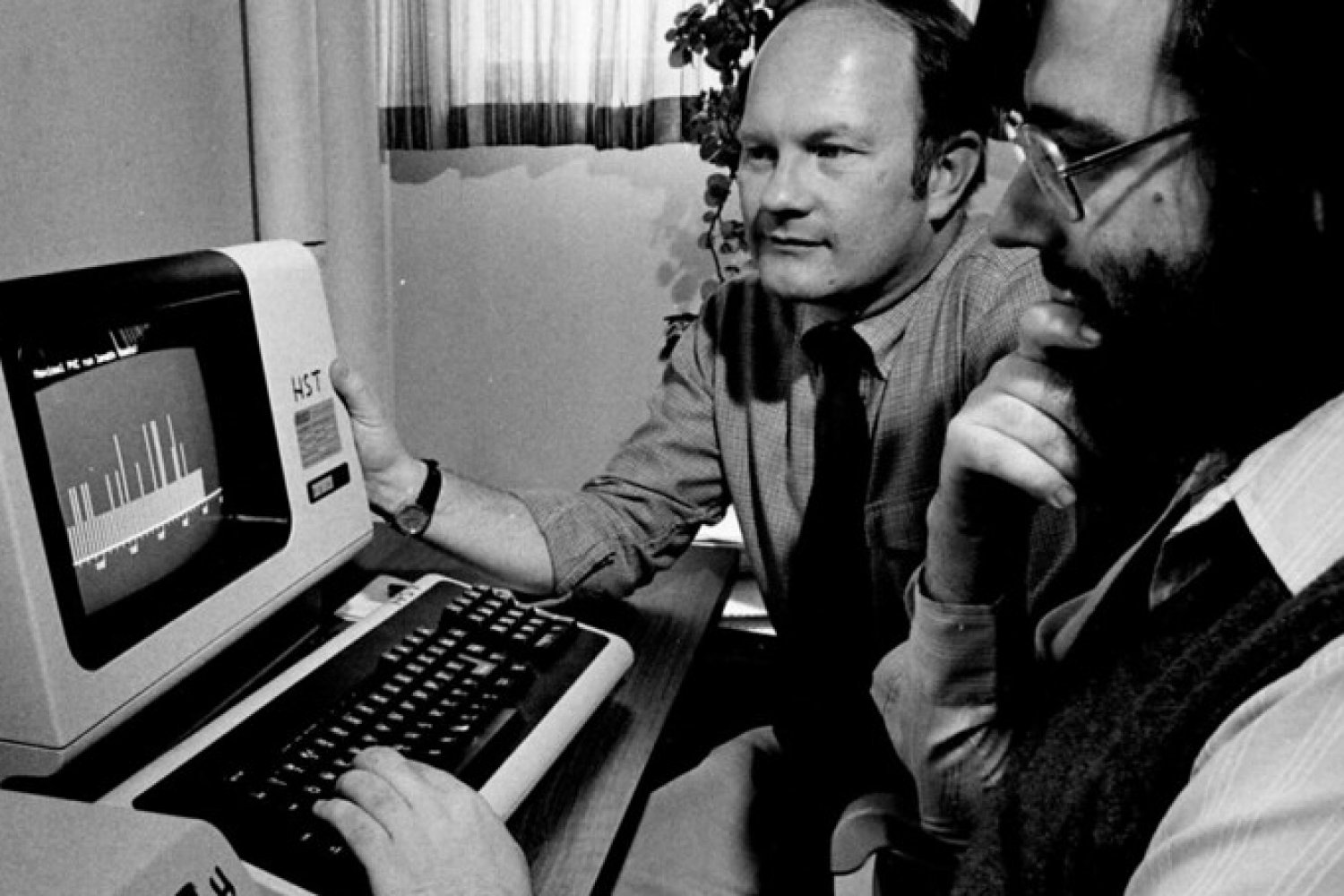
The visionary PhysioNet platform launched 25 years ago, based on a system developed at MIT in the 1970s. It has become one of the most comprehensive biomedical and clinical data repositories in existence.
Known for his clear and elegant writing style, Bertsekas shaped fields from control and optimization to large-scale computation and artificial intelligence.
MIT News · Artificial Intelligence· news.mit.eduJul 6, 2026
PhD student Rachel Sava, winner of the Envisioning the Future of Computing Prize, explores transformative improvements and dystopian risks of neural technology.
MIT News · Artificial Intelligence· news.mit.eduJun 30, 2026
Computer scientist Phillip Isola cuts through the hype to explain how AI agents work and what the future might hold for this rapidly advancing technology.
We use cookies to run the site and, with your consent, for analytics and to show ads.
See our Cookie Policy.