3D spatial reasoning underpins understanding and acting in the physical world, yet it remains unreliable in current multimodal large language models (MLLMs). These models falter at precise geometric measurement, at transforming between egocentric and allocentric viewpoints, and at grounding fine-grained appearance. The most common remedies fine-tune the model on large-scale curated spatial-reasoning datasets or attach dedicated encoders for 3D geometry, which typically couples the solution to costly supervision and a specific backbone. We instead introduce GraFT, a training-free framework that supplies the missing 3D structure through a compact, easily maintained 3D scene graph (3DSG). From this 3DSG, GraFT provides three spatial reasoning capabilities: (1) deterministic geometry through symbolic tools, (2) allocentric layout through a bird's-eye-view (BEV) rendering, and (3) visual-attribute grounding through task-relevant egocentric frames. On ScanQA, GraFT improves every metric over the same-backbone baseline, raising CIDEr by 27%. On VSI-Bench, GraFT improves frozen MLLMs by up to 65%, surpassing every proprietary and general-purpose open-source baseline, and several prominent fine-tuned spatial models.
Junqing Du, Fernando Ropero, Erkin Turkoz et al.· 0 citations
Few-shot fine-grained image classification (FSFGIC) aims to classify similar images with limited labeled examples. This work highlights the critical yet underutilized role of phase information in capturing structural relationships within an image. This study introduces a novel plug-and-play amplitude-phase integration (API) module that effectively combines local and global frequency amplitude and phase information for obtaining more comprehensive feature descriptors. Additionally, a dedicated network, named PSF-Net, is proposed that adaptively fuses phase-based spatial and frequency information for FSFGIS. The designed PSF-Net can be easily integrated into standard episodic training architectures for end-to-end training from scratch. Extensive experiments on five public datasets demonstrate that the method outperforms existing state-of-the-art benchmarks.
Ruiling Liu, Linyue Zhang, Wenyi Zeng et al.· 0 citations
We introduce LLaDA-Image, a unified framework that pairs a 6B Diffusion Transformer (DiT) trained from scratch with a frozen vision-language understanding module built on the LLaDA2.0-Mini diffusion language model backbone. Instead of relying heavily on paired image-text data from the beginning, we first build a strong visual generative prior through image-only pre-training and mid-training. The generation pipeline comprises 220M samples, 98 of which are real images. For efficient and scalable optimization, we use parameter-free RMSNorm throughout the DiT together with the Muon optimizer. The resulting unified model produces highly photorealistic images while accurately following fine-grained editing instructions. We further distill LLaDA-Image into LLaDA-Image-Turbo, enabling fast inference in 2-4 sampling steps. On Qwen-Image-Bench, LLaDA-Image achieves overall scores of 53.53 and 53.38 on the English and Chinese tracks, respectively, setting a new state-of-the-art among open-source models on both tracks. To support further research on capable and efficient generative models, we release our model weights, training code, and detailed recipes.
Chuyan Chen, Haoxing Chen, Kun Chen et al.· 0 citations
We present ENEAS, a unified, text-promptable method for instance tracking and semantic discovery. Text-promptable segmentation models, including the latest foundation models such as SAM 3, still suffer from temporal hallucinations, spatial fragmentation, and semantic misclassification: they fail to report target absence when an object leaves the field of view, segment local textures instead of the complete object during extreme close-ups, and prioritize visual features over ontological reality, so that visually similar artifacts such as statues, paintings, or reflections are segmented as target entities.
ENEAS works two ways from a single method: precise tracking and high-quality segmentation of a unique instance, and open-concept discovery of every instance a text query names, resolved by a semantic verification layer. For tracking, we extend the geometrically robust SeC architecture, previously limited to point interactions, with a text-prompting adapter and leverage its temporal memory, so that the target is held through disappearance without drifting to distractors and kept whole even when it fills the entire view. For discovery, the verification layer combines high-speed visual embedding matching with conditional VLM refinement, invoking semantic reasoning only for ambiguous candidates, which filters out the ontological errors that visual-only models cannot distinguish while keeping latency low. Designed with 3D reconstruction in mind, where a single misclassified distractor corrupts the asset, ENEAS unlocks high-quality semantic tracking and segmentation of video, of broad libraries, and of collections of temporally or spatially unordered data, together with the discrimination to tell true instances from their doppelgangers: things that look alike but are not the same. The code and models are available at https://github.com/speridlabs/eneas
Javier del Pino (SperidLabs), Salvador Rodr\'iguez (SperidLabs), Alejandro Garabito (SperidLabs) et al.· 0 citations
Reach audiences
Advertise in front of researchers, engineers, and readers.
Background. Remote photoplethysmography estimates the cardiovascular pulse from facial video, and its explanations have rested on inspecting heatmaps rather than on quantitative evidence about where a model reads it. We quantified the explanations and asked whether such explanations transfer between datasets and track model performance. Method. We trained eight condition-specific RhythmFormer models on NCKU-rPPG, recorded under three illumination levels, speaking, rotation, and cycling, estimated one heart rate per 5.12-second clip, and set them beside a UBFC-rPPG reproduction. Raw attention, rollout, attention flow, and Beyond Intuition were assessed by skin coverage and the Salience-guided Faithfulness Coefficient (SaCo). Results. Beyond Intuition ranked highest on both datasets, at median coverage 0.789 and SaCo 0.837 on Static level 3 against 0.826 and 0.917 on UBFC-rPPG; lower ranks differed. Within one participant of one condition, neither measure was related to a clip's heart-rate error, waveform correlation, or signal-to-noise ratio on either dataset: 186 of the 252 coefficients fell below $|\rho|=0.10$ and 28 reached $p<0.05$ against the 13 expected by chance. Across the eight scenarios only Beyond Intuition's coverage followed the three performance measures, at $\rho=-0.43$, $+0.57$, and $+0.43$, while the attention-only methods' SaCo ran opposite to each. It failed at 40 lux alone, its median coverage falling to 0.180 and its median SaCo to $-0.178$, whereas motion degraded the estimates far more without such a drop. Conclusions. Skin coverage and SaCo carry information complementary to the performance measures rather than a proxy for them: attributing to the skin does not guarantee an accurate estimate. What an attribution reveals about a condition is where the model looks rather than how faithfully its map is ordered.
Louis Chen, Torbj\"orn E. M. Nordling· 0 citations
Recent advances in text-to-video (T2V) diffusion models have demonstrated remarkable generative capabilities, yet their reliance on loosely curated training data raises pressing safety and copyright concerns. Concept erasure offers a principled remedy by removing unwanted semantics from pretrained models while preserving remaining concepts. However, existing approaches typically operate at a coarse granularity misaligned with the fine-grained, distributed nature of concept representations, leading to incomplete removal or degraded generation quality. We argue that surgical erasure fundamentally requires intervention at the level of monosemantic features, where each unit encodes a single interpretable concept. To this end, we propose EraseSAE, a novel framework that leverages sparse autoencoders to achieve surgical concept erasure in DiT-based T2V diffusion models via a principled decompose-attribute-erase pipeline. We first introduce the Partitioned Convolutional Sparse Autoencoder, which decomposes dense spatiotemporal activations into disentangled, interpretable sparse features while preserving spatiotemporal coherence. A contrastive attribution mechanism then contrasts activations from paired prompts to isolate concept-specific feature kernels. At inference, timestep-resolved spatiotemporal masks derived from the identified kernels confine erasure to regions where the target concept is active, leaving unrelated content intact. Extensive experiments across diverse diffusion models and concept erasure tasks demonstrate that EraseSAE achieves precise and robust concept removal with minimal quality degradation, substantially outperforming state-of-the-art methods. The code is available at https://github.com/HiDream-ai/EraseSAE.
We investigate what makes synthetic OCR supervision transfer to real Thai documents and use the resulting insights to build Wayu-Paxa-OCR-Zero, a Thai OCR model adapted without OCR labels from real Thai document pages. Synthetic data provide exact labels at scale, but "realism" conflates source domain, page context, typography, spatial structure, and glyph variation. We disentangle these factors with a controlled document-reconstruction pipeline and evaluate each variant under page- and crop-level training on printed and handwritten Thai documents. Non-text context has little consistent effect, whereas typeface diversity, two-dimensional structure, and real handwriting glyphs improve transfer; moreover, source-domain matching depends on training granularity, with in-domain reconstruction approaching real printed supervision under page-level training (1.82% versus 1.31% median character error rate) but underperforming out-of-domain reconstruction under crop-level training (15.59% versus 5.52%). Guided by these findings, we adapt the 0.9B-parameter PaddleOCR-VL-1.6 into Wayu-Paxa-OCR-Zero using 45,723 synthetic pages: relative to its base checkpoint, it reduces median character error rate from 6.64% to 1.24% on printed pages and from 74.87% to 20.55% on handwriting and outperforms Typhoon OCR v1 7B on all five evaluation sets, showing that synthetic-only training can be competitive.
Generative retrieval has demonstrated significant success by unifying representation learning and search into a single sequence-to-sequence generation task. However, extending this paradigm to cross-modal retrieval reveals a critical challenge arising from the inherent information asymmetry across different modalities, such as the gap between concise text queries and dense visual candidates. This structural mismatch causes the autoregressive decoder to suffer from forced hallucination when generating identifiers via standard trie-constrained beam search, where the model is severely penalized for failing to guess fine-grained details absent from the query, allowing irrelevant candidates to hijack top rankings. To address this issue, we propose Wildcard Inference with Dynamic Expansion (WIDE). WIDE employs Adaptive Entropy Thresholding (AET) to calibrate layer-specific uncertainty boundaries offline. During the decoding generation phase, Asymmetry-aware Wildcard Decoding (AWD) detects semantic blind spots and emits wildcards instead of forced deterministic identifiers, dynamically expanding the search space without incurring log-probability penalties. Finally, Blind-Spot Re-ranking (BSR) evaluates the expanded candidate pool using a hybrid scoring mechanism that combines discrete generation confidence with continuous semantic similarity. Extensive experiments on the M-BEIR benchmark demonstrate that WIDE outperforms state-of-the-art generative retrieval methods, effectively suppressing forced hallucination while maintaining compact index structures.
3D Gaussian Splatting has become a de facto scene representation for novel view synthesis, yet robustly learning 3D Gaussian primitives from visual input remains challenging. Standard optimization relies on gradient-based updates, but a common issue is the gradient vanishing phenomenon: a pixel far from a Gaussian primitive often has diminishing gradient magnitudes to influence primitive attributes, resulting in suboptimal scene reconstruction. In this paper, we propose a method to address gradient vanishing with a piecewise truncated gradient formulation that improves the optimization stability and robustness to initializations. We show that our method consistently improves 3D Gaussian Splatting with random and COLMAP initializations while being generalizable across static and dynamic Gaussian Splatting. As a by-product, we also examine the limitations of current benchmarks for dynamic scenes, and introduce a novel dataset for benchmarking dynamic Gaussian Splatting using synthetic 3D scenes. We demonstrate the effectiveness of our method in both static and dynamic settings for the public benchmarks and our proposed dataset.
Theo Morales, Nhat-Quynh Le-Pham, Robin Atkins et al.· 0 citations
In conditional coding-based neural video compression, the quality of temporal context directly affects compression per- formance. Existing methods mostly construct context from prop- agated reference features, but they are vulnerable to motion esti- mation and local alignment errors in regions with complex mo- tion, occlusion, and high-frequency textures, resulting in inaccu- rate temporal information. To address this issue, this paper pro- poses a method combining deformable temporal alignment and difference-aware spatial selective fusion. A Context-aware Tem- poral Alignment Module is used to generate complementary tem- poral context, while a Difference-aware Spatial Selective Fusion module adaptively selects reliable temporal information and sup- presses misalignment. Experiments show that the proposed method achieves certain rate-distortion performance improve- ment over DCVC-DC.
Chuyue Shan, Songlin Sun, Wang Chenwei et al.· 0 citations
We map tree species across Denmark using National Forest Inventory plots and EO data, while evaluating the potential of foundation models for large-scale forest characterization. We compare two alternative input representations for tree species classification: (i) manually engineered spectral-temporal features (STF) derived from multi-temporal Sentinel-1 and Sentinel-2 observations, and (ii) embeddings generated by the EO FMs TESSERA and AlphaEarth. Both representations are complemented with canopy height information. Random forest, XGBoost, and Multi-Layer Perceptron (MLP) classifiers are evaluated for all input representations, with separate assessments for pure and mixed forest stands. The STF-based MLP achieves the highest classification performance, yielding macro F1 scores of 0.843 and 0.653 for pure and mixed stands, respectively. The MLP trained on TESSERA embeddings delivers competitive performance for pure stands, achieving results within 1.1 percentage points of the best-performing model. TESSERA consistently outperforms STF-based models when fewer than approximately 25% of training plots are available, demonstrating a substantial advantage under limited training data. Multi-year observations systematically improve classification accuracy relative to single-year inputs, while ablation experiments reveal the complementary contributions of Sentinel-1 backscatter, spectral indices, and canopy height data. The best-performing model is subsequently applied at the national scale to generate a 10 m tree species map of Denmark. Area-adjusted validation indicates an overall map accuracy of 79.9%. The resulting map, released as an open-access product, is the first high-resolution national tree species map of Denmark and provides a valuable resource for forest monitoring, ecological research, and land management applications.
Alkiviadis Koukos, Spyros Kondylatos, Thomas Nord-Larsen et al.· 0 citations
Contrastive language-image learning (CLIP) has become a key paradigm for remote sensing vision-language understanding. However, existing remote sensing contrastive learning methods are mostly built on RGB-oriented CLIP architectures, making it difficult to exploit heterogeneous sensors such as SAR, multi-spectral imaging (MSI), and hyperspectral imaging (HSI). To address this limitation, we propose OmniRSCLIP, an end-to-end contrastive learning framework that supports multi-source sensor inputs for remote sensing vision-language modeling. The key idea is to extend CLIP beyond its fixed RGB input interface without breaking the pretrained visual knowledge. To this end, OmniRSCLIP introduces Spectral-Spatial Basis Decomposition (SSBD), which formulates arbitrary-channel adaptation as a basis recomposition problem: pretrained CLIP patch embeddings provide transferable spatial bases, while wavelength-conditioned coefficients span sensor-specific embedding kernels within a constrained visual prior space. This design avoids forcing heterogeneous sensors into a fixed-channel input space, while aligning them in a unified image-text semantic space. We further introduce a spectral-context-aware mask-based contrastive learning scheme to suppress modality-specific redundant features and enhance fine-grained image-text alignment. Finally, to support multi-modal training, we construct OmniRS5M, the first large-scale remote sensing image-text corpus covering RGB, SAR, MSI, and HSI. Experiments on retrieval, zero-shot classification, and semantic localization show that OmniRSCLIP preserves strong RGB-domain performance while effectively extending CLIP to heterogeneous remote sensing modalities.
Xiangyang Miao, Kelu Yao, Yekai Huang et al.· 0 citations
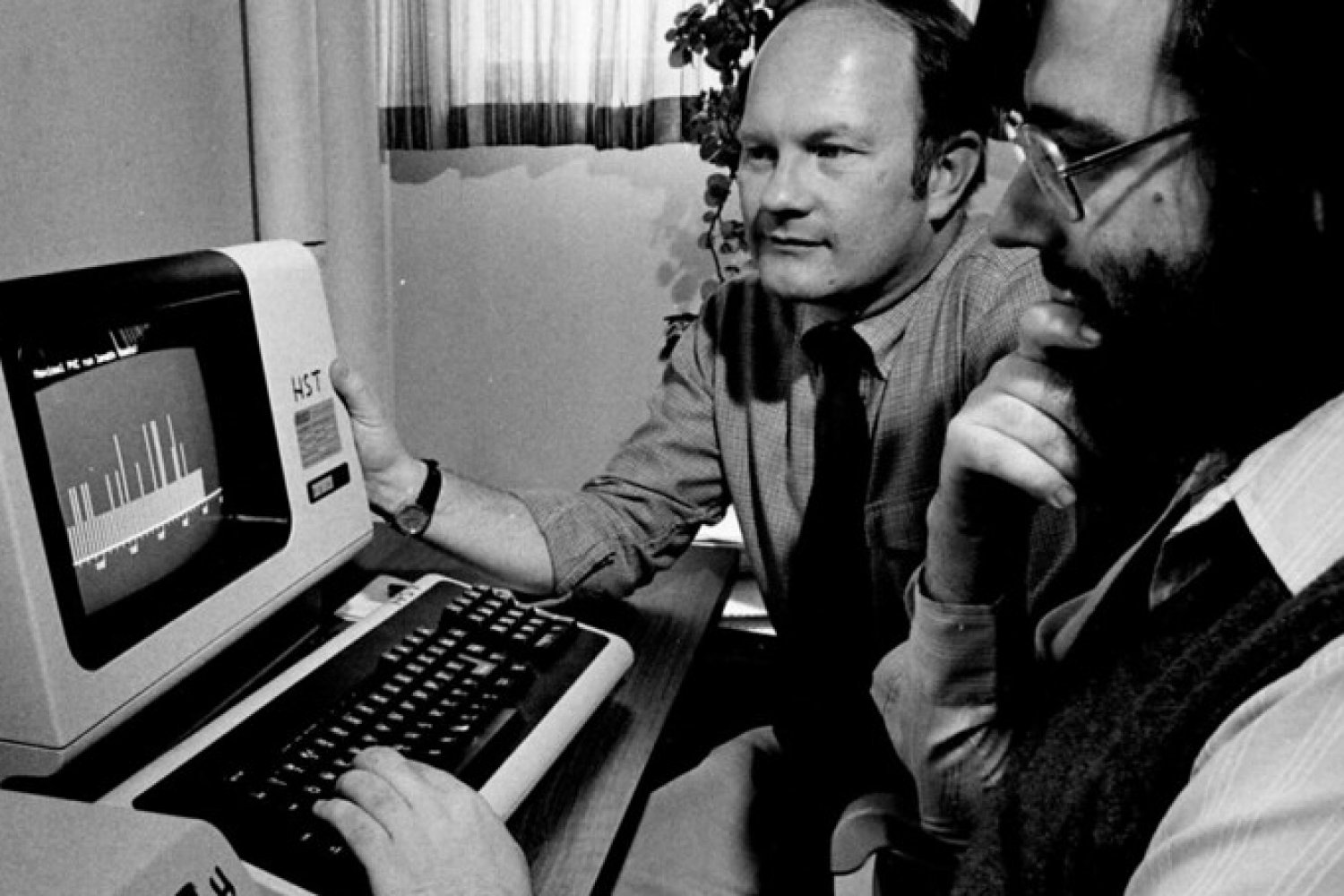
The visionary PhysioNet platform launched 25 years ago, based on a system developed at MIT in the 1970s. It has become one of the most comprehensive biomedical and clinical data repositories in existence.
Known for his clear and elegant writing style, Bertsekas shaped fields from control and optimization to large-scale computation and artificial intelligence.
MIT News · Artificial Intelligence· news.mit.eduJul 6, 2026
PhD student Rachel Sava, winner of the Envisioning the Future of Computing Prize, explores transformative improvements and dystopian risks of neural technology.
MIT News · Artificial Intelligence· news.mit.eduJun 30, 2026
Computer scientist Phillip Isola cuts through the hype to explain how AI agents work and what the future might hold for this rapidly advancing technology.