STREAM-BSG maintains an incremental buyer-supplier graph in a streaming state store and computes a 49-dimensional feature vector online - 15 node, 18 edge, 14 subgraph, and 2 current-row change-detection features - before classification with XGBoost. It targets business-to-business payment fraud rather than the business-to-consumer card fraud most academic work addresses, and formalizes five fraud topologies documented in industry practice: vendor injection, invoice cycling, payment-term manipulation, shell-supplier rings, and wire redirection. This repository holds the companion code, figures, datasets, and full reproduction pipeline for the paper.
Abhishek Sharma· Zenodo (CERN European Organi...· 0 citations
Graph isomorphism, the problem of determining whether two graphs are structurally identical despite potentially differing node labels and edge orientations, is a fundamental problem in computer science and theoretical mathematics. This paper investigates the potential for quantum algorithms, specifically leveraging Grover's algorithm, to improve the efficiency of graph isomorphism testing. We explore the theoretical complexity of this problem on a quantum computer, analyzing the impact of graph structure and algorithm parameters. The core claim is that determining graph isomorphism remains a computationally challenging problem, even with quantum acceleration. We delve into the limitations imposed by the problem's inherent complexity and the practical hurdles involved in implementing quantum algorithms for this task. The analysis focuses on the search space reduction offered by Grover's algorithm and its interaction with the graph's topology. We examine the factors that contribute to the algorithm's effectiveness, including graph size, connectivity, and the number of possible graph configurations. Ultimately, this work contributes to a deeper understanding of the computational challenges associated with graph isomorphism and provides insights into the potential and limitations of quantum computing in tackling this problem.
Jincheng Zhang· Zenodo (CERN European Organi...· 0 citations
Every Lorentzian spinfoam amplitude computed numerically truncates the sum over virtual SU(2) spins l_f >= j_f at a shell depth Delta l; the convergence of that sum has not been proved. This paper bounds the sum by the direct absolute-value route and reports how far it reaches. (1) For the first-kind 15j symbol of the vertex assembly we prove |15j| <= J, a closed form in the fifteen labels, with constant 1 proved optimal (saturated at a doubled-label tuple where both sides equal sqrt(3)/6). (2) Assembling J with rigorous booster envelopes under one shared rapidity, and under the explicit hypothesis that the internal 15j label and the four auxiliary intertwiners carry no growth rate, we derive an exact direction-resolved decay law for the envelope: coordinate directions decay with exponent at least 17/6, the law is piecewise affine on a 13-hyperplane arrangement (7,377 cells), and the envelope fails to be summable on a proper subcone around the isotropic diagonal with maximal deficit 7/18. (3) Over every choice the construction admits (1,458 members per booster) the best achievable exponent coincides with the realized one. VERSION 2 CORRECTS THE SCOPE OF (2)-(3): the auxiliary intertwiners have key-bounded cardinality but their values track the shell, so the decay law describes the envelope under the stated hypothesis and not the vertex tail; on the tail's actual support the absolute route fails by more than stated (crude exponent at the isotropic point at most -1/3 rather than 11/3), and the summand is supported only on the cone where, at each edge, the largest virtual spin is matched by at least one other. Theorem 1 is unaffected. All results are exact rational or symbolic statements at the stock convention rho = gamma (j+1), gamma = 6/5.
Adam Snyder· Zenodo (CERN European Organi...· 0 citations
This technical report introduces a cloud-native architecture designed to implement the Cognitive Edge Emergence Model (CEEM). Traditional language model generation relies heavily on generic associations and external valence inferences. In contrast, this architecture establishes an individual-specific, self-reinforcing cognitive framework by decoupling semantic embedding from dynamic edge weight updates. The system utilizes FastAPI on Cloud Run for asynchronous request handling, Vertex AI (Gemini API) strictly for text embeddings without valence inference, and Cloud SQL with pgvector for similarity matching and structural graph persistence. State management dynamically controls cognitive bandwidth B(t) and temperature tau(B), while a dedicated Cloud Run service computes the continuous edge weight evolution via the differential equation: dw_ij / dt = eta * a_i(t) * a_j(t) - lambda * w_ij(t) where edge weights (w_ij) are reinforced exclusively through co-activation (a_i * a_j). This architecture operationalizes a structural profile that mirrors individual cognitive trajectories rather than generic statistical associations. Keywords: Cognitive Edge Emergence Model (CEEM) Cloud Architecture pgvector Valence-free Inference Structural Cognition Lab Neural-Symbolic Integration
Takahiro Ikeda· Zenodo (CERN European Organi...· 0 citations
Reach audiences
Advertise in front of researchers, engineers, and readers.
Esiste un punto d'incontro perfetto in cui la successione di Fibonacci annulla l'attrito dei decimali, trasformando l'area bidimensionale del passato nel rapporto lineare del futuro (Shift-2). Questo saggio dimostra matematicamente il Principio Olografico e isola sperimentalmente il "punto di rottura" fisico dello standard IEEE 754 alla 20ª iterazione massiva: il confine esatto dove la pura geometria computazionale si scontra con i limiti fisici dei moderni processori al silicio. ABSTRACT (ITALIANO) Questo studio presenta un'indagine formale geometrico-computazionale sull'invarianza di scala di strutture bidimensionali sottoposte a progressione geometrica esponenziale. Attraverso lo studio sistematico del rapporto dinamico tra l'Area di un rettangolo e la Somma dei suoi lati contigui (R = Area/Somma), l'algoritmo sviluppato identifica un punto latente di risonanza armonica attivato esclusivamente dalle sequenze di Fibonacci. I risultati estendono i propri confini applicativi a tre domini fondamentali: 1. **Fisica dei Buchi Neri:** La relazione Shift-2 (Area_n = Rapporto_n+2) quantifica matematicamente lo sfasamento olografico, offrendo un modello puro per descrivere come l'entropia e l'informazione interna di un volume quantistico possano essere archiviate interamente sul proprio orizzonte degli eventi perimetrale. 2. **Computazione Quantistica e Chip 3D:** L'eliminazione totale del rumore decimale in presenza di crescita esponenziale offre un paradigma matematico esente da errori di arrotondamento floating-point, ottimizzando la conduttività termica nei microchip microscopici tridimensionali. 3. **Limiti Hardware Silicio:** L'opera documenta i limiti fisici delle CPU riscontrati alla ventesima iterazione massiva, isolando una deviazione decimale microscopica (.0156) derivante dall'esaurimento dei registri di memoria dello standard IEEE 754. --- ### ABSTRACT (ENGLISH) This paper presents a formal computational and geometric investigation into the scale invariance of 2D structures under geometric progression. By analyzing the dynamic ratio between a rectangle's area and the sum of its contiguous sides (R = Area/Sum) via an iterative simulation loop, we identify a latent harmonic resonance point triggered exclusively by Fibonacci sequences. The mathematical framework offers critical insights into three cutting-edge domains: 1. **Black Hole Physics:** The Shift-2 relation provides a pure algebraic model for the Holographic Principle, describing how the internal entropy of a quantum volume maps directly to its boundary event horizon. 2. **Quantum Computing Architectures:** The absolute collapse of micro-decimal noise allows for the design of fault-tolerant geometric microchips, optimizing thermal dissipation without floating-point registry overhead. 3. **Silicon Hardware Boundaries:** We document the exact binary breaking point at the 20th massive iteration, isolating a predictable micro-decimal error (.0156) stemming from IEEE 754 floating-point standard limits in modern CPUs.
Mario Cera· Zenodo (CERN European Organi...· 0 citations
This chapter presents a computational framework for intelligent indoor environmental management through artificial intelligence integration in smart urban infrastructure. The work systematically develops mathematical models for pollutant dynamics using mass balance principles and state space representation, followed by machine learning and deep learning approaches for predictive forecasting of indoor environmental conditions. Reinforcement learning and multi objective optimization techniques are introduced to balance air quality performance with energy efficiency objectives. The framework incorporates sensor networks, edge computing architectures, digital twin simulation environments, and explainable AI mechanisms to enable real time adaptive control. By integrating physical modeling with data driven intelligence, the proposed approach transforms indoor environmental regulation from static rule based operation into a predictive and self optimizing urban decision system aligned with sustainability and resilience goals.
Shalom Akhai, Mahapara Abbass· Advances in computational in...· 0 citations
The paper puts forward a smart control system for the energy internet that uses edge computing, with a focus on the combined innovation of smart grid technology, power electronics systems and predictive control. Adopting a 'cloud-edge-end' architecture, the system uses predictive control technology to precisely regulate power electronic thereby overcoming the real-time performance issues encountered by traditional centralised smart grids. The is in the dual-tiered predictive control design of the power electronics system, which allows for ideal planning at the and hour levels, greatly enhancing the performance efficiency of the smart grid. Test results show that the system the utilisation of renewable energy, reduces operating costs and grid peak-to-valley differences, and offers a new to the coordinated control of smart grid technology and power electronics systems.
Accurate short-term forecasts of the electrical power demand are required for the intelligent operation of the power grid and energy management. With the introduction of more decentralized power units and fluctuating energy demand, power consumption now has considerable non-linearity and time dependency, so the old prediction method is no longer suitable. To improve the accuracy of the forecast and operational efficiency, a new short-term energy consumption prediction method using Attention-LSTM is put forward in this paper. An optical interconnect system is employed in the above structure to achieve high-speed, stable transmission of consumption data; data cleaning and abnormal detection are done at the edge, and model and hyperparameter optimisation are carried out in the cloud. The dataset of daily energy demand is used for the test of the algorithm. The chosen input factors are past consumption, weather conditions and time attributes; a rolling window set is created, and then the demand for the next hour is predicted. LSTM is used to find the time dependency of the power profile, and attention is added to highlight important historical information. According to the simulation results, the Attention-LSTM model has performed better than the Persistence, LSTM and GRU models in terms of MAE, RMSE and MAPE. According to the ablation experiment, the attention layer and some kinds of modal input variables are also useful. Therefore, there will be more precise and punctual support for demand forecasting in the operation of intelligent grids in the environment of optical-computing synergy.
Yue Zheng, Yaoting Chen, Shihao Yin et al.· 0 citations
A two-tier cascaded assessment framework based on multi-dimensional feature extraction and Dempster-Shafer (D-S) decision fusion is proposed to address the physical blind spots inherent in single-parameter monitoring and the boundary ambiguity caused by high-noise environments during the insulation deterioration of 10 kV cable joints. At the feature level, a hybrid neural network incorporating the physical prior of a two-node Lumped Parameter Thermal Network (LPTN) is constructed. Partial Discharge (PD) signals are mapped into two-dimensional topological matrices utilizing Discrete Wavelet Transform (DWT) and Phase-Resolved Partial Discharge (PRPD) techniques, while temperaturecurrent sequences are synchronized via a sliding window mechanism. Subsequently, a dual-branch architecture comprising a modified single-channel ResNet-18 and a 1D-CNN-LSTM is utilized to achieve the dimensionality reduction and spatio-temporal alignment of microsecond-level PD spatial topologies and hour-level electro-thermal inertia characteristics. At the decision level, to resolve the conflict among multi-source sensing information, an improved D-S evidence theory based on a dynamic conflict coefficient K and a penalty factor β is introduced. This mechanism penalizes and distributes high-conflict beliefs equiprobably into independent state subspaces, thereby eliminating falsepositive misjudgments triggered by single-sensor node anomalies. Experimental validation based on 24,000 heterogeneous data pairs demonstrates that the proposed method achieves an overall assessment accuracy of 96.8% under strong perturbation conditions. The results indicate excellent diagnostic robustness and the potential for localized deployment in edge computing gateways.
Keyu Yue, Dalong Fu, Ziqi Zhou et al.· 0 citations
Urban-forest monitoring increasingly requires intelligent sensor-driven systems capable of characterizing short-term tree responses while operating efficiently within Internet of Things (IoT) and edge-computing environments. This study proposes a fusion-based artificial intelligence framework that integrates Quantization-Aware Training (QAT)-optimized PointNet++ models with machine-learning regression to predict a short-term dendrometer-derived stem-diameter response expressed in biomass-equivalent units. The framework combines 1024-point LiDAR tree representations, geometric measurements, and environmental sensor data through three components: QAT-optimized PointNet++ models for 34-species classification and trunk–crown part segmentation, frozen model-based prediction and geometric feature extraction, and MLP and XGBoost regression models for prediction of the short-term target. The dataset contained 2694 trees from five regions of South Korea, with the target derived from dendrometer-based stem-diameter measurements recorded over a 14-day interval between 8 September 2022 and 22 September 2022. Importantly, this short-term signal reflects both structural and reversible water-status-related stem dynamics and is therefore not interpreted as direct dry-biomass accumulation or carbon sequestration. The QAT-optimized models retained 92.52% segmentation accuracy (82.67% mIoU) and 80.46% species-classification accuracy, while the regression model reached R2 = 0.9663 and RMSE = 0.4437 kg for the defined biomass-equivalent target. Quantization reduced the saved model size of both encoders by approximately 10.5× (21 MB → 2 MB) and accelerated CPU inference by up to 4.1×. These efficiency measurements were obtained on an ×86 desktop CPU and therefore characterize computational compression benefits rather than completed deployment or field validation on a low-power embedded device. These results demonstrate the computational feasibility of combining compressed point-cloud perception with multimodal prediction of short-term dendrometer-derived stem dynamics. Validation over seasonal and multi-year periods using independent biomass-reference measurements would be required before extending the framework to long-term biomass accumulation or carbon-sequestration assessment.
This research paper establishes a limit-free, finite-dimensional algebraic framework for discrete spacetime geometry and quantum kinematics in (3+1) dimensions. Operating over the finite Galois field F_p (with prime characteristic p > 5 and p = 3 mod 4) and its quadratic extension F_p[delta] (isomorphic to the field of order p^2), the paper bridges Universal Hyperbolic Geometry (UHG) in projective 3-space P^3(F_p) with finite-state indefinite-Hermitian dynamics. The framework serves as the foundational master paper for an integrated finitist theory of spacetime and fundamental interactions, supplying the algebraic substrate for companion models of U(1) electromagnetism, SU(2) x SU(3) non-abelian gauge fields, and emergent gravitational dynamics. Key Mathematical Results and Contributions Witt-Index Incompatibility and 4x4 Clifford Engine:The paper proves via finite-field quadratic form classification that the (3+1)D Lorentzian form on 4D vector space has elliptic (minus) Witt type over F_p when p = 3 mod 4. This establishes a structural obstruction precluding linear quadratic-form isometries into 2x2 real matrix determinant spaces (which are split/hyperbolic). The paper resolves this obstruction by constructing an explicit minimal 4x4 Clifford algebra over F_p. Bivector edge anchors satisfy an exact quadratic polynomial identity, generating rational Cayley spinor transports whose induced adjoint action on vector space is proven algebraically to be special orthogonal (SO(3,1) transformations). The Parity-Quadrume Character Theorem:For every non-degenerate projective tetrahedron in P^3(F_p), the paper proves the exact finite-field theorem:chi_p(V) = -epsilon,where V is the Projective Quadrume (the normalized 4x4 Gram determinant), chi_p is the Legendre quadratic character, and epsilon is a Z_2 parity grading computed from the product of the vertex quadratic norms. This identity algebraically locks the geometric orientation and volume opening of the tetrahedron to the metric discriminant of the Lorentzian signature (-1). Finite-State Indefinite-Hermitian (Krein-Type) Dynamics:The state space is spanned by Cyclic Oriented Polygonal Splines (COPS) of non-degenerate tetrahedra modulo dihedral D_4 loop symmetries. Using a parity-preserving mutation graph, the paper defines an effective Hamiltonian with a reference-configuration potential that measures deviations from standard orthonormal cells. The resulting rational Cayley evolution operator satisfies exact Galois-Hermitian unitarity (U_dag U = I), Krein-type isometry (U_dag G U = G), and exact parity-sector decoupling. Exact Finite Path Expansion:The paper derives an exact finite matrix-product expansion for transition amplitudes, expressing discrete time evolution as an algebraic sum over mutation paths without invoking continuous path integrals. Conjectural Finitist-to-Continuum Program:The paper rigorously separates proved finite-field theorems from open continuum questions, laying out a structured six-step research program to investigate how discrete quadrume dynamics, additive character partition sums, and simplicial refinement limits may connect to higher-derivative Regge calculus and classical General Relativity (G_uv + Lambda g_uv = 0). Computational Verification and Reproducibility All algebraic identities, point-count distributions, Clifford matrix relations, Cayley unitarities, and path expansions are fully verified symbolically and numerically in Python (SymPy) over F_7 and F_7[delta] (field order 49). Complete automated verification scripts, state-space generators, and raw dataset tables are included and openly accessible in the accompanying software-and-data archive (Zenodo DOI: 10.5281/zenodo.21998225).
John D. Coady· Zenodo (CERN European Organi...· 0 citations
We prove six structural results for the local Weil quadratic form $Q_W^L$ on $L^2(-L,L)$ in the interval $\tfrac{1}{2}\log 2 < L < \tfrac{1}{2}\log 3$, the first-prime window where only the prime $n = 2$ contributes to the explicit formula. Our main technical contribution () is an algebraisation showing that the matrices $J_{ij}(\tau)$ and $E_{ij}(\tau)$ encoding the coupling between the prime-2 layer and the Legendre basis lie in $\mathbb{Q}[\tau]$ and are computable without numerical quadrature. We also prove a pure-rational absorption certificate (): $V + P_{2,7/20} \ge \tfrac{69}{100}V \ge 0$, with the key step $87^{16}\cdot 68^5 < 1701^5\cdot 32^{16}$ verified in Lean 4/Mathlib (integer comparisons via native_decide; transcendental bounds $\log 2 < 7/10$ and $\sqrt{2} > 7/5$ via Real.sum_le_exp_of_nonneg and Real.sqrt_lt_sqrt; the Arb-certified integral in is independent of the Lean formalisation). We give an exact spectral description of $C_{b,L}$ (), falsify Path A by explicit certified negative witnesses (), and identify the spectral mechanism: the Weil constant $c_L \approx 1.36527$ acts as a global negative diagonal shift that Path A cannot overcome, whereas without it the $\{P_0,P_2\}$ subspace is positive definite (). We also correct an error in an earlier draft that attributed the obstruction to an edge-mass asymptotic: the companion formula $\langle K_LP_0,P_2\rangle \sim c_2/\kappa_e(L)$ fails by a factor of $40$ inside the first-prime window, invalidating the proposed flip-point formula $\theta_0 = 1 - c_2/\kappa_e$ (). We prove the Path B Schur criterion () with the same certified Weil constant (derived from Suzuki \cite{Suzuki2026} equation (4.5); see (ii)). Finally, gives the finite-dimensional Schur reduction needed for FP-0.35 and records the numerical margins produced by the public Arb computation. In the present audit-safe revision, the repository's historical "residual = 0" accumulator is not treated as a rigorous interval-norm certificate: a strict outward upper bound (or an interval $LDL^{\mathsf T}$/Cholesky inertia certificate) is still required before the computational step can be promoted to an unconditional proof of FP-0.35. This paper therefore does not claim that the Riemann Hypothesis, or even positivity beyond the certified algebraic reductions, follows from the recorded pilot output.
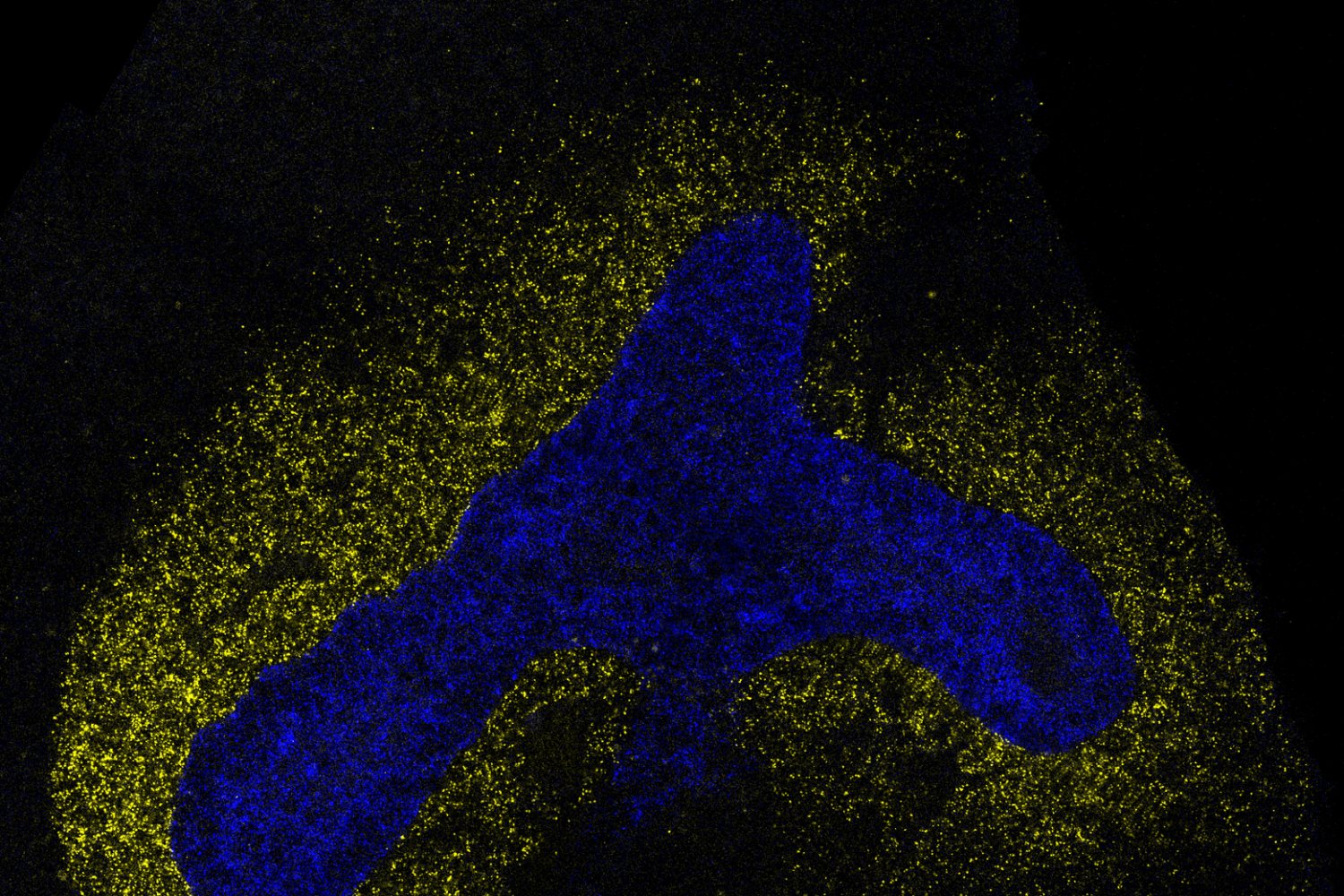
What if pathology foundation models could do more with less? GigaPath-Flash and GigaTIME-Flash cut computational demands while maintaining strong performance, opening the door to larger studies and broader exploration. The post GigaPath-Flash and GigaTIME-Flash: Toward population-scale discovery with efficient pathology foundation models appeared first on Microsoft Research.
MIT News · Artificial Intelligence· news.mit.eduAug 31, 2026
With millions of users across the world, Julia has been used to conduct cutting-edge research and to design new drugs, jet engines, heat pumps, and more.
MIT News · Artificial Intelligence· news.mit.eduAug 27, 2026
A new machine-learning framework aims to improve the success rate of computational protein design while moving away from results that reproduce sequences found in nature.