We give deterministic and uncoupled learning dynamics for finite multiplayer general-sum games under full-information feedback that achieve constant individual swap regret in self-play, independent of the horizon $T$. With $n$ players and at most $m$ actions each, every player's individual swap regret is $O(\sqrt n\,m\...
Action Chunking Transformers (ACT) are widely used to learn robot manipulation from demonstrations. Their conditional variational autoencoder includes an encoder meant to capture differences between demonstrations during training. The original ACT paper reported that encoder removal dropped the mean success rate from 3...
Convolutional Neural Networks (CNNs) are increasingly deployed in safety-critical edge applications, where soft errors can silently corrupt inference outputs and lead to unsafe decisions. Such applications typically rely on resource-constrained embedded GPUs, requiring fault detection and mitigation techniques that add...
Kyrylo Nazarevych, Mohammad Hasan Ahmadilivani, Krister Kaldre et al.· 0 citations
Power Flow (PF), Optimal Power Flow (OPF), and State Estimation (SE) are fundamental problems in power system analysis, but solving them is computationally expensive. Graph Neural Networks (GNNs) have been proposed as fast surrogates, yet existing solvers are trained for a single problem at a time, producing narrow mod...
Ferran Bohigas-Daranas, Hamid Latif-Mart\'inez, Eduardo Prieto-Araujo et al.· 0 citations
Reach audiences
Advertise in front of researchers, engineers, and readers.
Generative video models can serve as a promising backbone for robot navigation by predicting future observations as video plans. Recent approaches often condition video planning on short-horizon guidance and recover geometric waypoints through scene reconstruction, leaving longer-horizon planning and precise video-to-a...
Ho-Jin Lee, S. Li, Maximilian Hilger et al.· 0 citations
Learning humanoid-object interaction requires coordinating whole-body balance, locomotion, and dexterous hand contact to control both robot and object motion. Human demonstrations provide examples of coordinated interaction, but transferring these behaviors to humanoid robots requires learning how to establish and main...
Liu Cao, Xing-Ze Wu, Jing-Zhi Cui et al.· 0 citations
Efficient perception is central to robotic systems operating under constrained computation, memory, and latency budgets. Knowledge transfer from larger pretrained models offers a practical route to stronger compact perception networks, but existing approaches commonly rely on fixed distillation objectives or manually d...
Yanick C. Tchenko, Felix Mohr, Hicham Hadj-Abdelkader et al.· 0 citations
How and why does a recommender system fail the users it serves? Oftentimes, practitioners are left to improve their algorithms based on a combination of feedback from stakeholder teams, domain expertise, and insights from data analyses. Yet the nuances of how and where recommendations perform well or poorly for end use...
SungGeun Kim, Abhinav Narain, Daniel Nemirovsky· 0 citations
Traditional catastrophe (CAT) risk models rely on costly manual construction to generate extreme weather scenarios, an approach largely unchanged since the 1990s. As climate extremes intensify, this creates mounting challenges to the entire risk transfer chain. This study proposes the TAISE framework, which repurposes...
A framework for evaluating data-science agents on live, continuously updated data using executable ground truth and format-agnostic factoid scoring, which achieves a 29% improvement in the Matthews Correlation Coefficient and a 16% reduction in token consumption per test case.
Aniruddha Tamhane, Raghavendra Addanki, Ayushi Aggarwal et al.· 0 citations
We develop a certified continuation framework for equilibrium computation and for training deep equilibrium networks (DEQs), with training formulated as interpolation to accuracy $2^{-b}$. For inference, compact input homotopy selects a unique branch from a supplied start root, and a rounded Newton tracker follows it u...
The clinical management of autism spectrum disorder (ASD) faces a bottleneck in early screening, mainly because trained specialists are scarce and conventional assessment tools are subjective. Here, we introduce ASDchat, a multimodal large language model designed for evidence-based ASD screening, which takes video, aud...
Jun Chen, Qi Zhao, Yun-Liang Jiang et al.· 0 citations
Martin Trust Center Managing Director Bill Aulet introduces Dear Dreamer, a free platform for middle and high school students who want to learn about entrepreneurship.
Microsoft Research Blog· microsoft.comSep 30, 2026
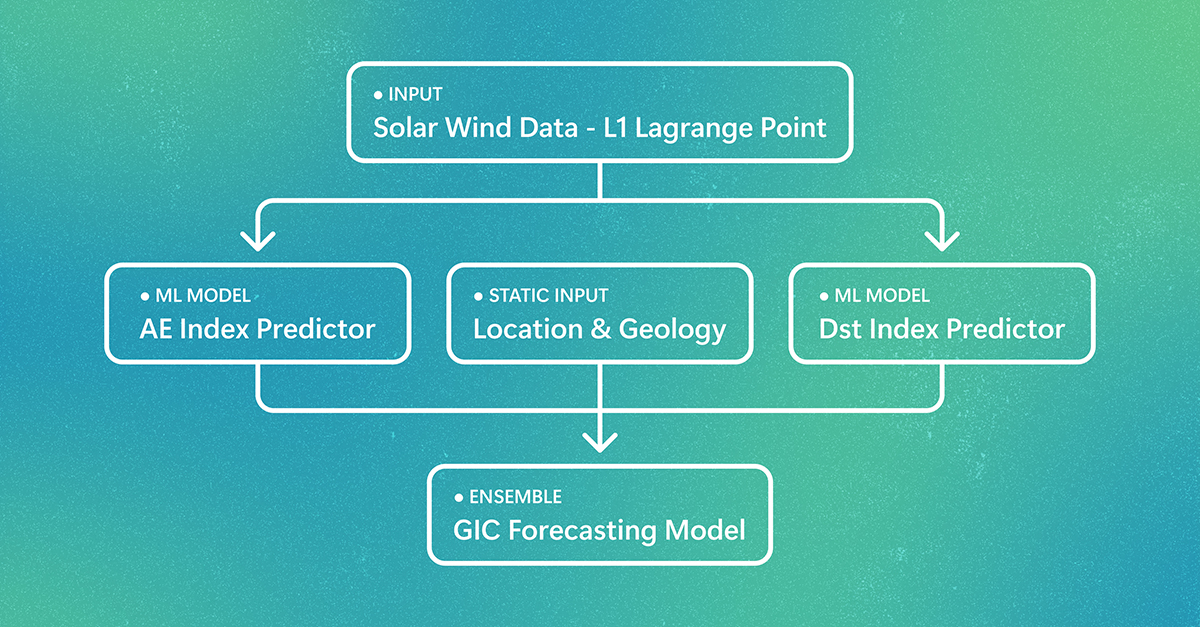
Extreme space-weather events can damage power systems on Earth and degrade GPS accuracy and satellite operations. A new machine learning system can predict where damage is likely to occur 30-60 minutes before a storm arrives. The post Forecasting space weather risks on power grids appeared first on Microsoft Research.
MIT News · Artificial Intelligence· news.mit.eduSep 29, 2026
Professor Sherry Turkle’s new book, “Artificial Intimacy,” offers a withering critique of chatbots and the antisocial dynamics she believes they encourage.
MIT News · Artificial Intelligence· news.mit.eduSep 25, 2026