Vibe coding is a software development practice in which developers state intent in natural language and large language models generate code. It is often framed as one-shot prompting, but the evidence describes an intent-driven, iterative workflow whose outcomes depend on how generated code is evaluated and governed. Knowledge of how vibe coding is defined, practiced, and governed is scattered across academic and practitioner sources, and, to our knowledge, existing reviews have not yet integrated both evidence streams. We conducted a multivocal literature review of peer-reviewed and grey literature following established guidelines. Searches spanned 2022 to October 2025. After screening, credibility assessment, and snowballing, 47 sources were retained (28 peer-reviewed and 19 grey) and analyzed through descriptive mapping and thematic synthesis across eight research questions. Vibe coding is consistently described as an iterative generation-evaluation-revision loop rather than a one-shot activity, and developer work shifts from writing code towards specification, supervision, and validation. Short-term productivity and time-to-prototype gains are reported in 21 of 47 sources (45%), while evidence on maintainability, long-term quality, and safeguard effectiveness remains limited. Evidence is strongest for prototyping and user-interface work and weakest for production, data-intensive, and safety-critical use, and tool visibility does not imply effectiveness. This is one of the first reviews to integrate peer-reviewed and grey literature on vibe coding under a single documented protocol. Future work should evaluate safeguard effectiveness, study session-level dynamics and long-term maintainability, and test vibe coding in production, data-intensive, and safety-critical settings.
Shahbaz Siddeeq, Muhammad Waseem, Kai-Kristian Kemell et al.· 0 citations
Short-term Heart Rate Variability (HRV) forecasting could provide clinicians with actionable lead time for detecting autonomic dysfunction and adverse cardiac events. Consumer wearable devices generate fragmented, artifact-rich HRV signals that challenge conventional forecasting approaches. In this study, we evaluated the forecasting ability of three Time Series Foundation Models (TSFMs), TimesFM, Chronos, and MOIRAI, against traditional baselines (Mean, Exponential Smoothing, and Exponentially Weighted Moving Average) on real-world wearable data collected from 49 healthy individuals. To address data fragmentation, we introduce a variability-preserving imputation method that augments linear interpolation with locally adaptive stochastic noise, retaining physiological dynamics essential for accurate forecasting. The results show that TSFMs outperformed all baselines without fine-tuning, achieving average Mean Absolute Scaled Error (MASE) between 0.81 and 0.87 across TSFMs and both context lengths (32 and 64 time steps), with Chronos and TimesFM as the top models, though MOIRAI showed limited gains over baselines. With up to a 2-hour forecast horizon, the results establish a baseline for TSFMs'performance on a real-world dataset, highlighting domain-specific fine-tuning as a promising direction for clinical deployment.
Luukas Peräkylä, F. Sohrab, Ville Hautamäki et al.· 0 citations
Code-generating tools are increasingly used in software development, yet experience reports on conversational"vibe coding"under production constraints remain limited. This paper presents an experience report from a small full-stack team that applied contextual prompting and explicit architectural constraints to build (i) a multi-project agent learning platform designed for sustained, production-oriented use and (ii) an academic retrieval-augmented generation system. The agent platform supports multiple isolated projects, each with structured memory and background processing, thereby enforcing project-level isolation. The RAG system provides citation-grounded answers, role-based access control, and evaluation tracking. Across both systems, vibe coding accelerated scaffolding and integration. However, the generated code often under-specified isolation rules and infrastructure constraints when these were not explicitly defined. Consequently, aspects such as multi-tenancy, access control, memory policies, and asynchronous processing required deliberate architectural design and verification. We observe a shift in engineering effort from boilerplate implementation toward constraint specification and enforcement auditing. We also identify recurring architectural"non-delegation zones"where conversational code generation remains insufficient for production reliability.
Md Nasir Uddin Shuvo, M. Islam, Mahade Hasan et al.· arXiv.org· 0 citations
Automated authoring of Gherkin Behavior-Driven Development (BDD) acceptance criteria remains a manual bottleneck in requirements engineering. This study investigates whether epic-organized LLM-generated Gherkin produces higher quality and coverage than requirement-aligned generation. We compare our Timeless (an epic-organized LLM pipeline) approach against a naive large language model (LLM) baseline on four requirements documents (107 requirements) from the PURE dataset. Evaluation covers structural metrics, automated requirement coverage via TF-IDF and dense embeddings, and blind expert assessment by four researchers. In our evaluation, the JSON-constrained pipeline produced structurally valid scenarios across all generated outputs, while the zero-shot baseline achieved 99% structural validity. Semantic coverage was comparable to the baseline, with Timeless achieving 94.3% semantic Requirement Coverage Rate compared with 92.9% for the baseline. TF-IDF produced lower coverage scores for the epic-organized output, suggesting that lexical metrics may miss coverage when scenarios paraphrase requirements at a higher level of abstraction. Expert raters prefer the epic-organized strategy on Correctness (4.61 vs 4.14), Executability (4.61 vs 4.07), and Completeness (4.31 vs 3.50). Overall, the results suggest that epic-organized generation can improve perceived Gherkin quality while maintaining comparable semantic coverage, although broader replication is needed before generalizing this finding.
Shahbaz Siddeeq, M. Abbasi, Jussi Rasku et al.· 0 citations
Reach audiences
Advertise in front of researchers, engineers, and readers.
Organisations are examining how generative AI can support their operational work and decision-making processes. This study investigates how employees in a energy company understand AI adoption and identify areas where AI and LLMs-based agentic workflows could assist daily activities. Data was collected in four weeks through sixteen semi-structured interviews across nine departments, supported by internal documents and researcher observations. The analysis identified areas where employees positioned AI as useful, including reporting work, forecasting, data handling, maintenance-related tasks, and anomaly detection. Participants also described how GenAI and LLM-based tools could be introduced through incremental steps that align with existing workflows. The study provides an overview view of AI adoption in the energy sector and offers a structured basis for identifying entry points for practical implementation and comparative research across industries.
Malik Abdul Sami, Z. Rasheed, Meri Olenius et al.· 0 citations
In agile software development, maintaining high-quality user stories is crucial, but also challenging. This study explores the use of large language models to automatically improve the user story quality in Austrian Post Group IT agile teams. We developed a reference model for an Autonomous LLM-based Agent System and implemented it at the company. The quality of user stories in the study and the effectiveness of these agents for user story quality improvement was assessed by 11 participants across six agile teams. Our findings demonstrate the potential of LLMs in improving user story quality, contributing to the research on AI role in agile development, and providing a practical example of the transformative impact of AI in an industry setting.
Zheying Zhang, M. Rayhan, Tomas Herda et al.· International Conference on...· 48 citations· ⚡4
The full-day workshop on AI and Agile at XP 2025 convened a diverse group of researchers and industry practitioners to address the practical challenges and opportunities of integrating Artificial Intelligence into Agile software development. Through interactive sessions, participants identified shared frustrations related to integrating AI into Agile Software Development practices, including challenges with tooling, governance, data quality, and critical skill gaps. These challenges were systematically prioritized and analyzed to uncover root causes. The workshop culminated in the collaborative development of a research roadmap that pinpoints actionable directions for future work, including both immediate solutions and ambitious long-term goals. The key outcome is a structured agenda designed to foster joint industry-academic efforts to move from identified frustrations to successful implementation.
Tomas Herda, Victoria Pichler, Zheying Zhang et al.· XP Workshops· 3 citations
Retrieval-Augmented Generation (RAG) systems are emerging as a key approach for grounding Large Language Models (LLMs) in external knowledge, addressing limitations in factual accuracy and contextual relevance. However, there is a lack of empirical studies that report on the development of RAG-based implementations grounded in real-world use cases, evaluated through general user involvement, and accompanied by systematic documentation of lessons learned. This paper presents five domain-specific RAG applications developed for real-world scenarios across governance, cybersecurity, agriculture, industrial research, and medical diagnostics. Each system incorporates multilingual OCR, semantic retrieval via vector embeddings, and domain-adapted LLMs, deployed through local servers or cloud APIs to meet distinct user needs. A web-based evaluation involving a total of 100 participants assessed the systems across six dimensions: (i) Ease of Use, (ii) Relevance, (iii) Transparency, (iv) Responsiveness, (v) Accuracy, and (vi) Likelihood of Recommendation. Based on user feedback and our development experience, we documented twelve key lessons learned, highlighting technical, operational, and ethical challenges affecting the reliability and usability of RAG systems in practice.
M. Hasan, Muhammad Waseem, Kai-Kristian Kemell et al.· EUROMICRO Conference on Soft...· 10 citations· ⚡1
Refactoring is a constant activity in software development and maintenance. Scale and maintain software systems are based on code refactoring. However, this process is still labor intensive, as it requires programmers to analyze the codebases in detail to avoid introducing new defects. In this research, we put forward a large language model (LLM)-based multi-agent system to automate the refactoring process on Haskell code. The objective of this research is to evaluate the effect of LLM-based agents in performing structured and semantically accurate refactoring on Haskell code. Our proposed multi-agent system based on specialized agents with distinct roles, including code analysis, refactoring execution, verification, and debugging. To test the effectiveness and practical applicability of the multi-agent system, we conducted evaluations using different open-source Haskell codebases. The results of the experiments carried out showed that the proposed LLM-based multi-agent system could average 11.03% decreased complexity in code, an improvement of 22.46% in overall code quality, and increase performance efficiency by an average of 13.27%. Furthermore, memory allocation was optimized by up to 14.57%. These results highlight the ability of LLM-based multi-agent in managing refactoring tasks targeted toward functional programming paradigms. Our findings hint that LLM-based multi-agent systems integration into the refactoring of functional programming languages can enhance maintainability and support automated development workflows.
Shahbaz Siddeeq, Muhammad Waseem, Z. Rasheed et al.· International Conference on...· 4 citations
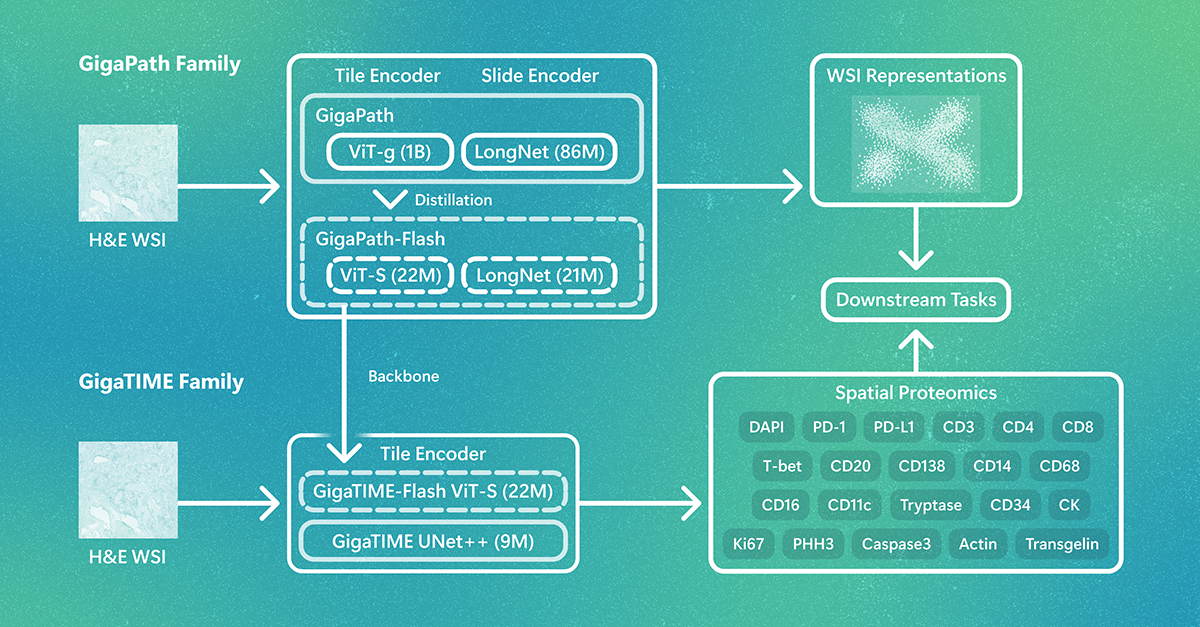
What if pathology foundation models could do more with less? GigaPath-Flash and GigaTIME-Flash cut computational demands while maintaining strong performance, opening the door to larger studies and broader exploration. The post GigaPath-Flash and GigaTIME-Flash: Toward population-scale discovery with efficient pathology foundation models appeared first on Microsoft Research.
MIT News · Artificial Intelligence· news.mit.eduAug 27, 2026
A new machine-learning framework aims to improve the success rate of computational protein design while moving away from results that reproduce sequences found in nature.