The positive results of ISIT counseling on psychological distress symptoms and reducing perinatal grief during follow-ups conducted immediately post-intervention and 3 months after the intervention suggest that it will be useful for managing the complications of spontaneous abortion.
Nazanin Karimihamzekolaee, Hajar Adib-rad, Hajar Pasha et al.· Health Science Reports· 0 citations
A novel basis expansion approach is proposed to fit a variable‐domain functional regression model, which assumes the functional nature of the covariate (daily steps) and incorporates the sample data into the model without alignment to enrich the interpretability of the model.
Pavel Hernández-Amaro, María Durbán, M. C. Aguilera-Morillo et al.· Biometrical journal. Biometr...· 0 citations
AI-assisted development tools enable software engineers to generate implementations at substantially higher speed and volume than in traditional workflows, yet relatively little is known about how existing guardrails evolve in response.
This work presents the first characterization study of open-source satellite software, examining its ecosystem and development practices, revealing a highly heterogeneous and task-specialized ecosystem with 66 programming languages and diverse implementation strategies.
Jin-Feng Wen, Qi Liang, Yuehan Sun et al.· 0 citations
Reach audiences
Advertise in front of researchers, engineers, and readers.
RTL-Obliger is presented, a neuro-symbolic framework that infers implicit security obligations of register-transfer-level RTL in a functionality-preserving two-stage generation and raises mean all-pass rates.
Guang Yang, Xing Hu, Xiang Chen et al.· 0 citations
PLCBENCH is presented, to the authors' knowledge, the first real-PLC hardware-in-the-loop (HIL) framework for characterizing this cyber-to-physical capability and its boundaries and it combines vendor-native interaction, commercial PLC execution, closed-loop reduced-order process simulation, and independent outcome ver...
Yitian Zhou, Jing-Yu Zheng, Qi-Liang Jiang et al.· 0 citations
An entity-only external interface with task-conditioned relation materialization during inference with two-layer index separates global routing from local entity focus is proposed and evaluated on DeepSeek-V4-Flash and SWE-bench Verified.
A method called Personalized Probing Puzzles to evaluate students' understanding of their own code, and a pilot study shows that it can help identify potential gaps in students' understanding of their own code.
Yufan Zhang, Jaromir Savelka, S. Goldstein et al.· arXiv.org· 0 citations
Analysis of patterns of knowledge and use of medicinal plants and biomedical medicines among migrants in an urban setting contributes to understanding how medicinal plant knowledge and therapeutic practices are maintained or transformed in urban migrant contexts.
Bruno Nascimento da Silva, Kaique Caetano Silva, Bruna Ferreira de Barros et al.· Revista Brasileira de Farmac...· 0 citations
MEmilio is a modular, high-performance framework for epidemic simulation that harmonizes the specification and execution of diverse dynamic epidemiological models within a unified and harmonized architecture, and aims to lower barriers to reuse and generalize models, enable principled comparisons of implicit assumption...
Julia Bicker, Carlotta Gerstein, David Kerkmann et al.· Scientific Reports· 0 citations
Verification and validation (V&V) campaigns for satellites commonly rely on FlatSat platforms to access critical electrical and communication interfaces before final integration. For CubeSats, an ideal platform should be compact and minimize reliance on external instrumentation. Existing solutions often rely on externa...
J. C. E. Barcellos, C. Freitas, V. N. Kürschner et al.· IEEE Journal on Miniaturizat...· 0 citations
XREPOTEST is introduced, a multilingual repository-level benchmark for unit test generation spanning five underexplored languages: Rust, Go, Julia, PHP, and Ruby, and Invocation Rate is proposed to assess whether generated tests meaningfully exercise the intended functionality.
L. Dung, Dong Cao Van, Nam Le Hai et al.· 1 citation
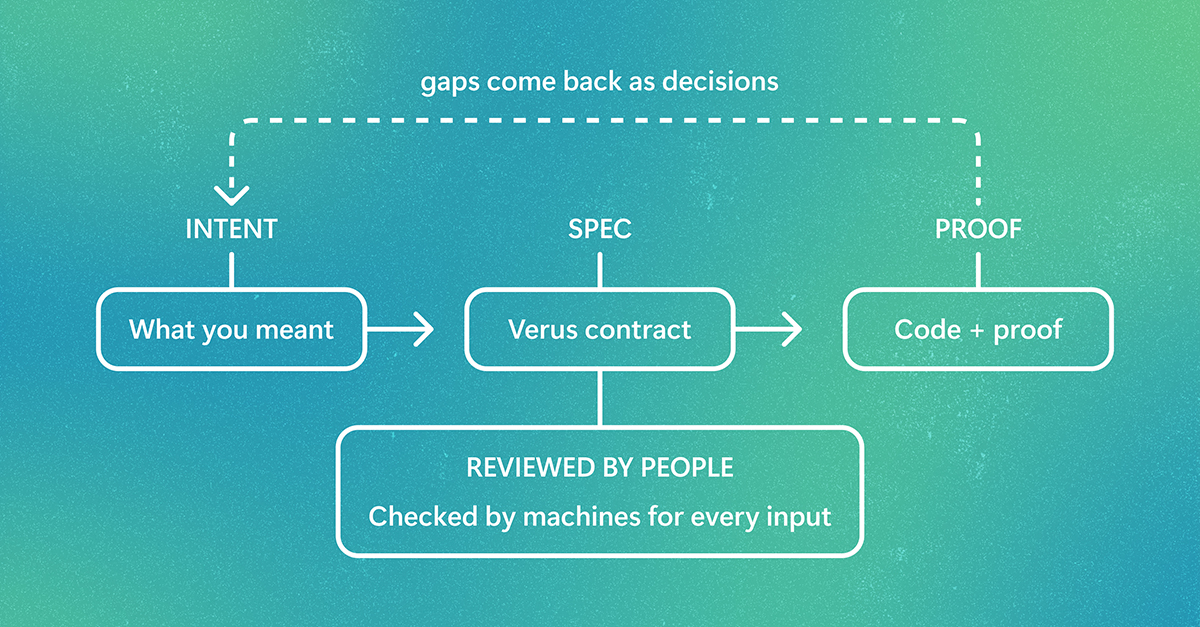
AI agents can generate code at a scale that’s hard for humans to review line-by-line. PDD Kit helps ensure the code is doing what the developer intended by creating formal specifications and testing against them. It converts developer intent into a Verus specification, proves AI-generated code meets it for every input, and uses tests where proofs aren't practical. Developers review intent, not every line. The post Formally verifying agent-written full-stack web apps with PDD Kit appeared first o…
Is your company’s AI sovereign? A practical guide for CIOs on AI vendor lock-in, EU Data Act switching, cloud sovereignty, and testing your exit plan before you need it. The post Sovereignty Is the Option to Leave appeared first on GPT-Lab.
Microsoft Research Blog· microsoft.comOct 30, 2026
Evaluating Microsoft Copilot at enterprise scale requires test data that captures the full complexity of real organizations, yet real enterprise data contains sensitive information that cannot be used for evaluation under any circumstances. The post From synthetic enterprise data evaluations to real Microsoft Copilot AI confidence appeared first on Microsoft Research.
Microsoft Research Blog· microsoft.comOct 29, 2026
Host Sowbhagya Suresh shares some of the latest news and cutting-edge research from across Microsoft—from understanding the challenges facing coding agents to uncovering how people use AI at work and improving extended-range weather forecasting. The post Microsoft Research Focus – Edition #97 appeared first on Microsoft Research.