It is demonstrated that the prevalence of hypoalbuminemia and hyperuricemia was higher in hypertensive patients than the controls, and albuminuria was a significant predictor of hypoalbuminemia and hyperuricemia.
Arega Zenaw, B. Biadgo, Getnet Fetene et al.· Health Science Reports· 0 citations
BACKGROUND
Underreporting is a defining problem in the registration of workplace violence across public services. This is reinforced by inconsistent, often poor incident descriptions and the absence of a clear, shared nomenclature. Without an ontology-backed structure, similar events are recorded differently across set...
I. Steenhout, Ronald Buyl· JMIR Research Protocols· 0 citations
This study presents a landslide susceptibility assessment using multiple parameters by integrating remote sensing, GIS, and field observations in the Jammu and Kashmir region. Eight contributing variables were selected for landslide susceptibility analysis: Land Use and Land Cover (LULC), proximity to roads, streams, s...
A. S. Jasrotia, Amit Sharma, I. C. Das et al.· Scientific Reports· 0 citations
Computer-assisted planning with patient-specific rods accurately reproduced the intended PSO and segmental lumbar correction but did not reliably predict global sagittal parameters, suggesting current planning tools might require refinement to improve the accuracy of predicted postoperative alignment using pre-bent rod...
Renzo A. Laynes, Rafael Garcia de Oliveira, Kenneth T. Nguyen et al.· Journal of Neurosurgery : Sp...· 0 citations
Reach audiences
Advertise in front of researchers, engineers, and readers.
A benchmark radiomics model to preoperatively identify the histological grade of spinal meningiomas is constructed, suggesting a need to characterize the interplay between tumor grade and extent of resection as drivers of local disease control in SMs.
Adhith Palla, N. Goff, Blake Perdikis et al.· Neurosurgical Focus· 0 citations
DSA is presented, an evidence-aware orchestration framework for multi-market stock research with large language model (LLM) agents that establishes implementation conformance for the tested software contracts, not superior report quality, forecasting accuracy, or investment returns.
It is shown that, in this sample, existing validation workflows often did not detect the particular controlled reproducibility-relevant changes introduced by the study, motivating reproducibility-oriented mutation testing as a complementary way to assess whether research-software safeguards constrain experimentally imp...
Surf_2_Volume is presented, a workflow that combines Connectome Workbench, FreeSurfer, AFNI, AFNI, neuromaps, and Python image processing to convert cortical and subcortical CIFTI parcellations into Neuroimaging Informatics Technology Initiative (NIfTI) volumes.
Shu-Guang Yang, Zi-Yi Wang, Yue-Ru Shen et al.· 0 citations
This work proposes a model-based approach that optimizes model parameters, and evaluates first- and best-improvement algorithms, simulated annealing (SA), threshold accepting (TA), and two novel algorithms utilizing directional derivatives (dd) to guide exchanges.
This paper presents an empirical evaluation of Large Language Models (LLMs) for automated model-based test generation, compared with a state-of-the-art model-based testing tool (GraphWalker) and its built-in algorithms (random and quick random for edge and vertex coverage settings).
H. Şanli, Onur Kilinççeker, Cihat Çetinkaya· 0 citations
The work identifies five distinct stages of the documentation review process: self review, technical review, editorial review, play testing, and post-publication feedback, and draws on practitioners with distinct expertise to address quality across content, presentation, and user experience.
Avinash Bhat, Ian Arawjo, Disha Shrivastava et al.· 1 citation· ⚡1
It is found that functional correctness alone is insufficient to assess the operational reliability of LLM-generated software before deployment in continuously running environments, and aging trends can also emerge in manually developed implementations.
César Santos, Michele Vitagliano, Roberto Natella et al.· 0 citations
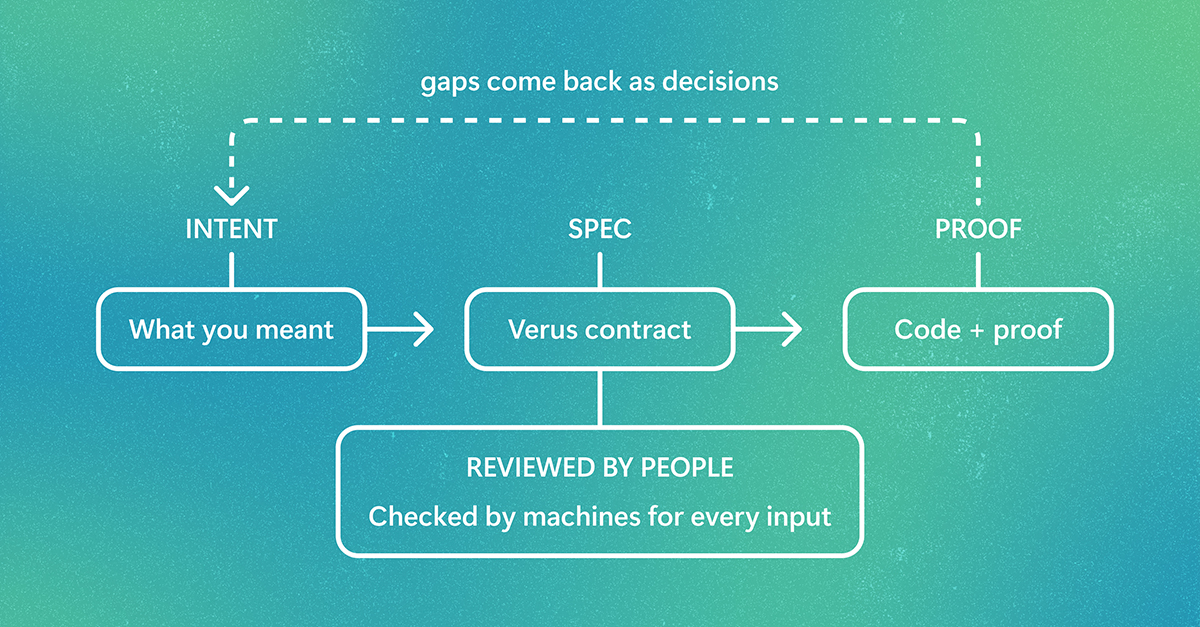
AI agents can generate code at a scale that’s hard for humans to review line-by-line. PDD Kit helps ensure the code is doing what the developer intended by creating formal specifications and testing against them. It converts developer intent into a Verus specification, proves AI-generated code meets it for every input, and uses tests where proofs aren't practical. Developers review intent, not every line. The post Formally verifying agent-written full-stack web apps with PDD Kit appeared first o…
Is your company’s AI sovereign? A practical guide for CIOs on AI vendor lock-in, EU Data Act switching, cloud sovereignty, and testing your exit plan before you need it. The post Sovereignty Is the Option to Leave appeared first on GPT-Lab.
Microsoft Research Blog· microsoft.comOct 30, 2026
Evaluating Microsoft Copilot at enterprise scale requires test data that captures the full complexity of real organizations, yet real enterprise data contains sensitive information that cannot be used for evaluation under any circumstances. The post From synthetic enterprise data evaluations to real Microsoft Copilot AI confidence appeared first on Microsoft Research.
Microsoft Research Blog· microsoft.comOct 29, 2026
Host Sowbhagya Suresh shares some of the latest news and cutting-edge research from across Microsoft—from understanding the challenges facing coding agents to uncovering how people use AI at work and improving extended-range weather forecasting. The post Microsoft Research Focus – Edition #97 appeared first on Microsoft Research.