Skip to content

Inverting Self-Triggered Control: Adversarial Reinforcement Learning for Sparse Denial-of-Service Attacks

Sep 2026 · 0 citations · 17 references
Computer Science Engineering

Abstract

Self-triggered reinforcement learning control (RL-STC) learns the sparsest control schedule that preserves Lyapunov-decreasing stability under a Run-Time Assurance (RTA) override. We invert this: an adversarial RL agent learns the sparsest jamming or Denial-of-Service (DoS) schedule that destabilizes the closed loop, with a Lyapunov-increase admissibility predicate mirroring the defender's safety certificate. We prove a plant-property lower bound on the minimum jam count required for an immediate hold-last medium-access-control adversary to force a crash against a self-triggered controller (STC) satisfying a Lyapunov contract, and recover a certificate-level analog of the consecutive-grouping optimality of prior count-budget DoS scheduling as a corollary. This extends the DoS-scheduling count-budget analysis from periodic and linear-time-invariant to STC controllers. Empirically, we train against four fixed defenders per plant (one Linear Quadratic Regulator (LQR) and three RL-STC) on Pendulum, CartPole, and Quadrotor2D. The learned adversary is the only adversary that crashes every defender on every plant at $100\%$: greedy misses Quadrotor2D LQR on $42\%$ of episodes and periodic misses Pendulum LQR on $97\%$. On jam-time-per-failure it beats baselines by up to $2.8\times$, and shows its widest absolute margin on Quadrotor2D LQR. Robustness ablations show that Gaussian observation noise exceeding the initial-state magnitude and position-only observation both preserve $100\%$ failure rate and keep the learned adversary strictly ahead of both baselines on jam-time-per-failure.
View source

Similar papers

#machine learning Review Open access Oct 2014

Software development in startup companies: A systematic mapping study

The results indicate that software engineering work practices are chosen opportunistically, adapted and configured to provide value under the constrains imposed by the startup context.

Nicolò Paternoster, Carmine Giardino, M. Unterkalmsteiner et al. · 394 citations · ⚡54

Diffusion models as plug-and-play priors

The possibility of inferring high-dimensional data inference in a model that consists of a prior and an auxiliary differentiable constraint given some additional information is considered, thereby allowing a range of potential applications in adapting models to new domains and tasks.

Alexandros Graikos, Esmeralda S. Whitammer, N. Jojic et al. · 316 citations · ⚡15

Trajectory Balance: Improved Credit Assignment in GFlowNets

It is proved that any global minimizer of the trajectory balance objective can define a policy that samples exactly from the target distribution, and empirically demonstrate the benefits of the trajectories balance objective for GFlowNet convergence, diversity of generated samples, and robustness to long action sequenc...

Esmeralda S. Whitammer, Moksh Jain, Emmanuel Bengio et al. · 302 citations · ⚡60
#machine learning Review Open access Jun 2014

Why Early-Stage Software Startups Fail: A Behavioral Framework

This state-of-practice investigation was performed using a literature review followed by a multiple-case study approach and presents how inconsistency between managerial strategies and execution can lead to failure by means of a behavioral framework.

Carmine Giardino, Xiaofeng Wang, P. Abrahamsson · 175 citations · ⚡19
#artificial intelligence Open access Jul 2024

Gender, Race, and Intersectional Bias in Resume Screening via Language Model Retrieval

This work investigates the possibilities of using LLMs in a resume screening setting via a document retrieval framework that simulates job candidate selection and finds that the MTEs are biased, significantly favoring White-associated names in 85% of cases and female-associated names in only 11.1% of cases.

Kyra Wilson, Aylin Caliskan · 131 citations · ⚡8
#machine learning Review Open access Oct 2016

“Failures” to be celebrated: an analysis of major pivots of software startups

This study conducts a case survey study based on the secondary data of the major pivots happened in 49 software startups, and demonstrates that customer need pivot is the most common among all pivot types.

Sohaib Shahid Bajwa, Xiaofeng Wang, Anh Nguyen-Duc et al. · 127 citations · ⚡15

Related blog posts

Microsoft Research Blog Sep 30, 2026

Forecasting space weather risks on power grids

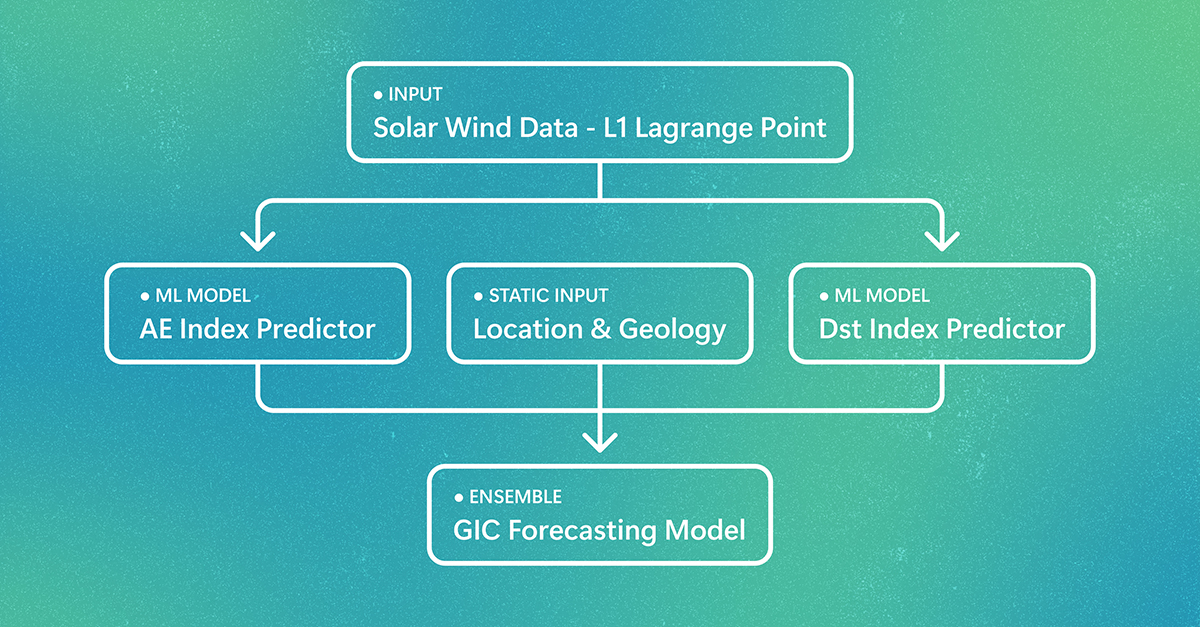
Extreme space-weather events can damage power systems on Earth and degrade GPS accuracy and satellite operations. A new machine learning system can predict where damage is likely to occur 30-60 minutes before a storm arrives. The post Forecasting space weather risks on power grids appeared first on Microsoft Research.

We use cookies to run the site and, with your consent, for analytics and to show ads. See our Cookie Policy.