Federated learning enables collaborative training without sharing patient-level data, but most studies remain simulations. Based on five requirements derived from the literature, we analyzed 14 FL frameworks and found that none fully satisfied these requirements. We present FL-Net, a novel federated clinical research framework to fulfill all requirements. It integrates modular data harmonization, data discovery, disclosure control, securely built versioned FL-Net-Tools and containerized federated workflow execution into a persistent network. It enables the re-use of harmonized data and workflows across studies. FL-Net's end-to-end capabilities were evaluated through harmonization, cross-study patient discovery across MIMIC and US-130, and reproducible, audited federated workflows with up to 50 concurrent clients. FL-Net is being developed within the dAIbetes and Microb-AI-ome EU projects and will cover over 800,000 patients across 10 hospitals in 9 countries covering longitudinal and single point in time data, FL-Net provides a practical foundation for interoperable, reproducible, and privacy-preserving multicenter clinical research.
FLIP (Federated Learning Interoperability Platform), an open-source, multi-application platform that makes FL training and evaluation repeatable and improve repeatability, auditability, and site-specific governance, is presented.
R. Garcia-Dias, A. Bagur, Chayanin Tangwiriyasakul et al.· arXiv.org· 0 citations
Introduction: Rare and heterogeneous disease research increasingly relies on privacy-enhancing technologies such as federated learning (FL) to enable cross-institutional collaboration across fragmented datasets. However, data quality assurance in FL can be limited, as individual-level data may not be directly accessibl...
J. Hogenboom, N. Pérez, Q. Filori et al.· medRxiv· 0 citations
Background/Objectives: Federated learning (FL) enables multi-institutional model development in oncology without sharing patient-level data, but automated FL infrastructures typically require dedicated servers, firewall modifications, and substantial IT support to deploy. These requirements may be prohibitive for small...
Stuart W. Sommers, Chun-Lei Zheng, J. Corrigan et al.· Journal of Clinical Medicine· 0 citations
Health surveillance in modern healthcare increasingly relies on AI, raising concerns about the exposure of patients' identifiable information (PII) in automated workflows. This paper presents the Comprehensive Patient Personal Data Sovereignty System (CPPDSS), a privacy-preserving framework designed to enforce real-tim...
Edoghogho Olaye, Williams O. Aigbe, David Onwuka et al.· International Journal of App...· 0 citations
MedAL is a scalable method for fine-tuning LLMs across many health systems without sharing patient-level data, enabling high-performance local models for reasoning over clinical notes and may also be useful for training multimodal healthcare AI models.
Ahmed Bakr, Augusto Garcia-Agundez, Travis Atkison et al.· Journal of Biomedical Inform...· 0 citations
A federated learning framework with data locality for healthcare diagnostics that enables multiple hospitals to jointly train accurate models while keeping patient data within institutional boundaries is introduced.
Rakeshkumarreddy Ambati· International Journal of Art...· 0 citations
Research Manager Mike Walker reflects on a career spanning hacker culture, cybersecurity, and AI, sharing lessons about trust, teamwork, leadership, and why solving difficult problems requires curiosity, judgment, agility—and an understanding of the rules. The post Learn the rules: The hacker mindset appeared first on Microsoft Research.
MIT News · Artificial Intelligence· news.mit.eduNov 17, 2026
By studying the computational foundations of language learning, Associate Professor Jacob Andreas builds intelligent systems that can communicate effectively with humans.
Microsoft Research Blog· microsoft.comNov 16, 2026
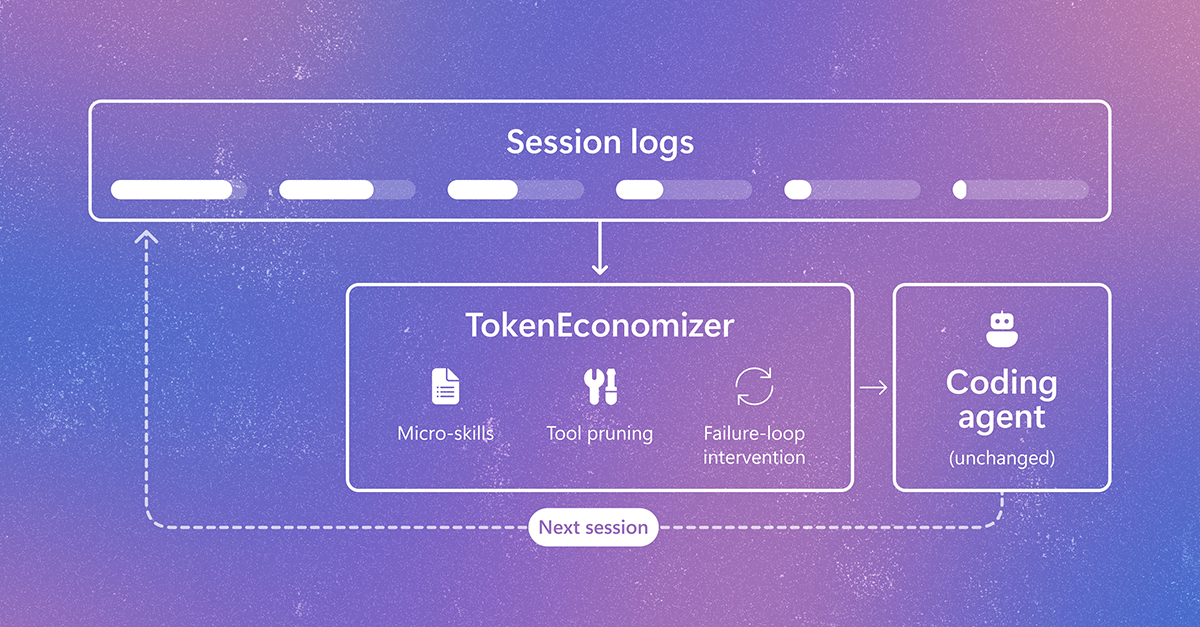
AI coding agents are increasingly help developers fix bugs and build features largely on their own, but every interaction with their models consumes tokens. In each session, an agent sends instructions, tool descriptions, and session history to its model. Most efforts to reduce this cost focus on individual tasks. Yet developers return to the same […] The post TokenEconomizer: Learning from Experience to Make AI Coding Agents More Efficient appeared first on Microsoft Research.
We use cookies to run the site and, with your consent, for analytics and to show ads.
See our Cookie Policy.