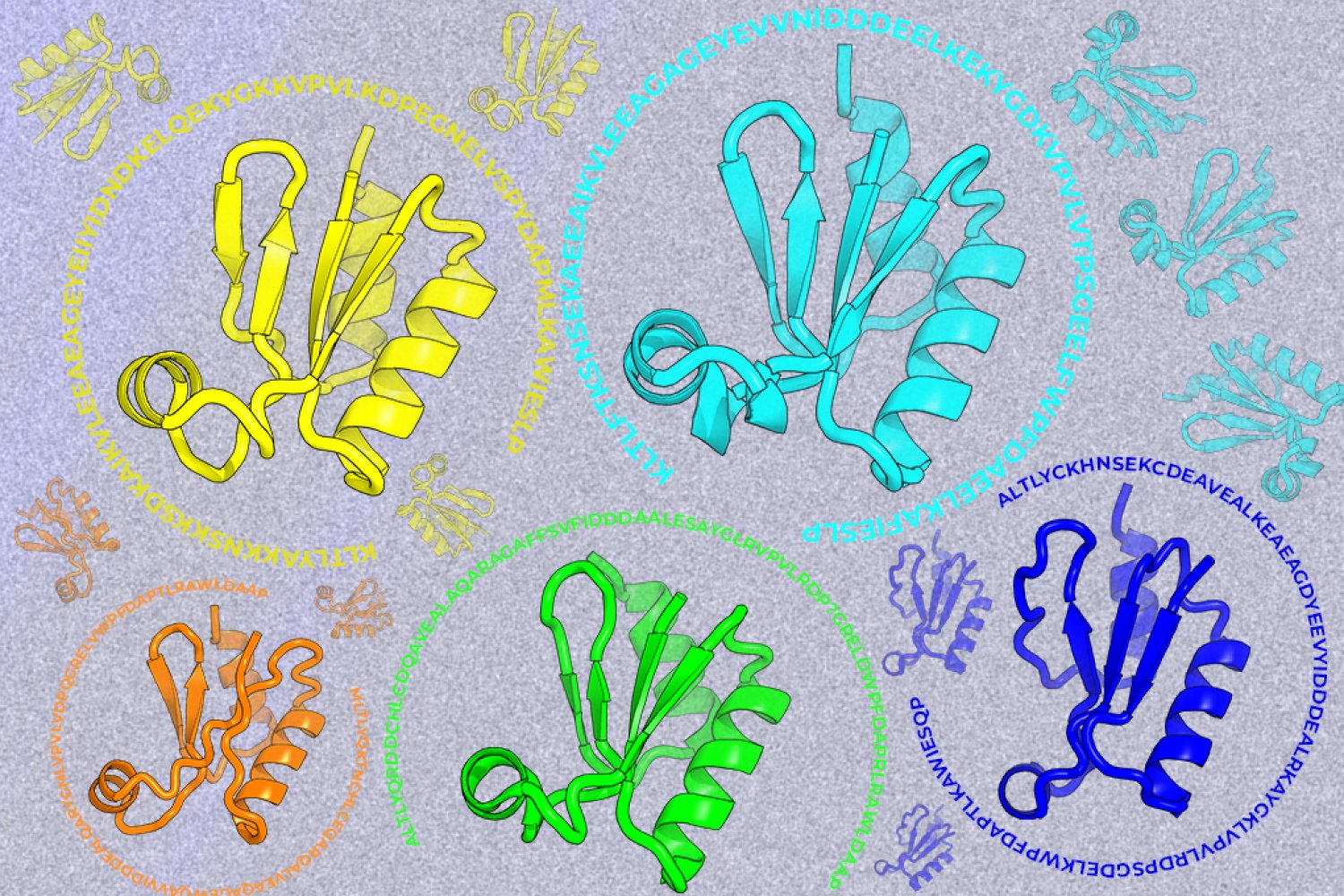
An unsupervised multi-source mutation preference distillation framework that learns from relative mutation preferences while explicitly modeling cross-source disagreement is proposed that achieves the best overall performance among the evaluated zero-shot baselines and naive multi-source fusion strategies on ProteinGym.
Abstract
Protein mutation effect prediction is fundamental to protein engineering and disease variant interpretation, yet experimentally measured mutation data remain accurate but extremely sparse. To provide scalable supplementary mutation signals, we construct a PDB-wide mutation augmentation dataset that exhaustively enumerates single-site substitutions on experimentally resolved protein structures and aligns mutation signals from physics-based energy models, protein language models, and inverse folding models. Large-scale analysis under a unified mutation preference representation reveals substantial differences in the consistency, concentration, and substitution patterns of mutation distributions across models, indicating that disagreement is pervasive and reflects conflicting inductive biases rather than random noise. Motivated by these observations, we propose an unsupervised multi-source mutation preference distillation framework that learns from relative mutation preferences while explicitly modeling cross-source disagreement. Without using any experimental mutation labels during training, our approach achieves the best overall performance among the evaluated zero-shot baselines and naive multi-source fusion strategies on ProteinGym. We release the dataset and evaluation pipeline to support reproducible studies of protein mutation effects.

The comparison of adopter and non-adopter sample reveals three potential adoption inhibitor, security, data privacy, and portability, which underlines the importance of the technical and security perspectives for research investigating the adoption of technology.
Nattakarn Phaphoom, Xiaofeng Wang, S. Samuel et al.· Journal of Systems and Softw...· 111 citations· ⚡8
This study investigates how Lean internal startup facilitates software product innovation in large companies and identifies its enablers and inhibitors, and shows the potential of the method-in-action framework to investigate the Lean startup approach in non-startup context.
Henry Edison, Nina M. Smørsgård, Xiaofeng Wang et al.· Journal of Systems and Softw...· 78 citations· ⚡6
This paper highlights the challenges to conduct proper affect-related studies with psychology, provides a comprehensive literature review in affect theory, and proposes guidelines for conducting psychoempirical software engineering.
D. Graziotin, Xiaofeng Wang, P. Abrahamsson· SSE@SIGSOFT FSE· 56 citations· ⚡4
This study conducts a multiple case study on twenty European software startups and proposes a prototype-centric learning model in early stage software startups, and identifies factors that occur as barriers but also facilitators for prototyping in earlystage software startups.
Anh Nguyen-Duc, Xiaofeng Wang, P. Abrahamsson· International Conference on...· 44 citations· ⚡5
It is demonstrated that linker-free PROTACs can outperform traditional designs, marking a paradigm shift in PROTAC development for targeted protein degradation.
Pinal, a 16-billion-parameter foundation model that produces protein candidates from natural-language functional descriptions, supports natural language as a high-level interface for candidate generation in protein design, enabling programmable exploration with reduced reliance on manually specified structural or seque...
A new machine-learning framework aims to improve the success rate of computational protein design while moving away from results that reproduce sequences found in nature.