Skip to content

Continual Learning Mechanisms Compose for Long-Horizon Memorization

Sep 2026 · 1 citation · 57 references
Computer Science

TL;DR

Together, these results show that composing complementary mechanisms substantially improves long-horizon memorization beyond what any individual mechanism achieves.
Abstract

Language models may need to internalize information that arrives over time and retain it through many subsequent updates. To study this challenge, we introduce long-horizon memorization, a setting in which a model learns 100 query-answer tasks through continual supervised fine-tuning without retaining earlier training examples or receiving task identifiers at inference. Sequential updates cause catastrophic forgetting, and no single continual learning mechanism we evaluate maintains strong retention at this horizon. We hypothesize that mechanisms addressing complementary sources of forgetting will be more effective when composed. We organize these compositions along two design dimensions. Data, function, and weight anchors specify what prior information each update should preserve, while low-rank allocation rules determine where successive updates are retained. To test this hypothesis systematically, we construct three distinct 100-task memorization datasets. We introduce task-level successive halving to search the combinatorial design space and use a factorial experiment to measure individual and interaction effects. Our best method combines all three anchors with merged LoRA, ranks among the top 3 methods in all datasets, and raises average final retention from 1.2% under naive sequential fine-tuning to 34.9%, a 28-fold improvement. The data anchor and merged LoRA provide the largest average gains and interact super-additively on all three datasets. Together, these results show that composing complementary mechanisms substantially improves long-horizon memorization beyond what any individual mechanism achieves.

View source

Similar papers

#artificial intelligence Review Aug 2026

When to Review: Spaced Repetition for Continual Pre-Training of Language Models

Spaced Repetition Training (SRT) is introduced, a continual learning framework inspired by cognitive science, which schedules sample-rehearsal using the SuperMemo-2 (SM-2) algorithm, and preserves broad benchmark performance that naive continual pre-training and uniform replay substantially degrade.

Alankar Atreya, Devesh Batra, Yoages Kumar Mantri et al. · 1 citation
Preprint Aug 2026

Beyond Forgetting: Diagnosing and Harnessing Shared Reasoning in Continual RLVR

Reinforcement learning with verifiable rewards (RLVR) commonly post-trains reasoning models on multiple tasks, while rerunning multitask RLVR (MTRL) as new tasks are added makes capability expansion costly. We therefore study continual RLVR, which updates the existing model as each task arrives. The central question is...

Li-Rui Luo, Guo-Xi Zhang, Hong-Ming Xu et al. · 0 citations
#natural language process... Preprint Sep 2026

Time-Incremental Continued Pretraining of LLMs: Knowledge Updates Without Catastrophic Forgetting

Large language models (LLMs) drift out of date the moment their pretraining ends, yet retraining from scratch is prohibitively expensive. Continued pretraining (CPT) is the natural remedy, but it is typically evaluated through a continual learning lens that assumes disjoint data streams. This is a poor fit for time-inc...

Firat Öncel, S. Ali, M. Ravanelli et al. · 0 citations
#artificial intelligence Preprint Sep 2026

Learning Dynamics of Continual Learning: A Unified View of Data Attribution, Forgetting, and Plasticity Loss

Modern language models are likely to be updated throughout their lifetime rather than trained once and frozen. Each update therefore participates in a recurring cycle: decide which experience to learn from, understand what that update changes, and remain capable of learning from what comes next. We show that these chal...

Yi Ren, Wen-Long Deng, Guan-Zhe Hong et al. · 0 citations
Preprint Aug 2026

From Memorization to Absorption: Mixed-Policy RL for Continual Knowledge Injection

This work proposes Golden-GRPO Injection (GRIN), a three-stage self-learning framework for continual knowledge injection that substantially outperforms SFT and mixed-policy RL baselines on the harder question types while matching them on basic fact recall.

Zhibo Hou, Fan Zhao, Zhiyu An et al. · 0 citations
#machine learning Preprint Sep 2026

GenMem: Generative Symbolic Memory for Self-Evolving Harness

GenMem is presented, which reformulates memory management as generative symbolic addressing, a multi-level discrete token tuple drawn from a Cartesian-product address space that factorizes a million-scale sparse memory space using fewer than one hundred discrete symbols.

Xin-Ke Jiang, Tao Feng, Wei-Xuan Xu et al. · 0 citations

Related blog posts

Microsoft Research Blog Sep 30, 2026

Forecasting space weather risks on power grids

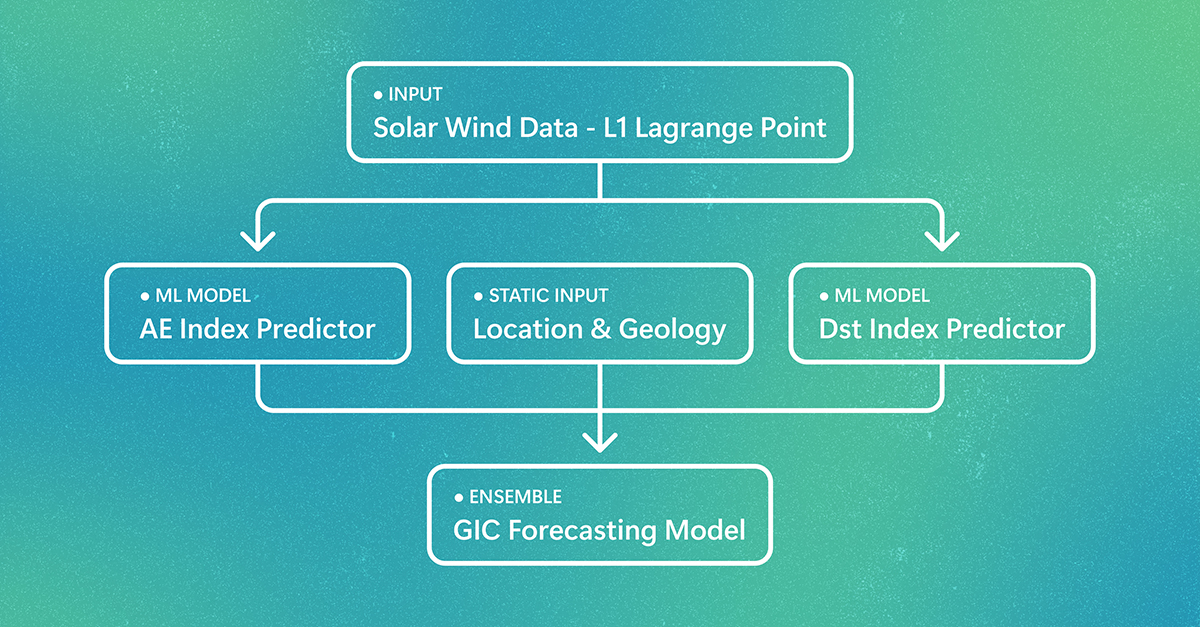
Extreme space-weather events can damage power systems on Earth and degrade GPS accuracy and satellite operations. A new machine learning system can predict where damage is likely to occur 30-60 minutes before a storm arrives. The post Forecasting space weather risks on power grids appeared first on Microsoft Research.

We use cookies to run the site and, with your consent, for analytics and to show ads. See our Cookie Policy.