Nov 2024· arXiv.org· Vol abs/2411.08507· 6 citations· 23 references
Computer Science
Abstract
Present-day software development faces three major challenges: complexity, time consumption, and high costs. Developing large software systems often requires battalions of teams and considerable time for meetings, which end without any action, resulting in unproductive cycles, delayed progress, and increased cost. What if, instead of large meetings with no immediate results, the software product is completed by the end of the meeting? In response, we present a vision for a system called TimeLess, designed to reshape the software development process by enabling immediate action during meetings. The goal is to shift meetings from planning discussions to productive, action-oriented sessions. This approach minimizes the time and effort required for development, allowing teams to focus on critical decision-making while AI agents execute development tasks based on the meeting discussions. We will employ multiple AI agents that work collaboratively to capture human discussions and execute development tasks in real time. This represents a step toward next-generation software development environments, where human expertise drives strategy and AI accelerates task execution.

This paper investigates developing real-world perception for active agents, proposes Gibson Environment for this purpose, and showcases a set of perceptual tasks learned therein.
F. Xia, Amir Zamir, Zhi-Yang He et al.· 2018 IEEE/CVF Conference on...· 1,069 citations· ⚡112
This publication proposes a definition and a classification of agile software development approaches and analyses ten software development methods that can be characterized as being "agile" against the defined criterion.
P. Abrahamsson, O. Salo, Jussi Ronkainen et al.· arXiv.org· 727 citations· ⚡54
The study shows that agile practices improve both informal and formal communication, but indicates that, in larger development situations involving multiple external stakeholders, a mismatch of adequate communication mechanisms can sometimes even hinder the communication.
M. Pikkarainen, Jukka Haikara, O. Salo et al.· Empirical Software Engineeri...· 401 citations· ⚡48
The results indicate that software engineering work practices are chosen opportunistically, adapted and configured to provide value under the constrains imposed by the startup context.
Nicolò Paternoster, Carmine Giardino, M. Unterkalmsteiner et al.· Information and Software Tec...· 394 citations· ⚡54
The possibility of inferring high-dimensional data inference in a model that consists of a prior and an auxiliary differentiable constraint given some additional information is considered, thereby allowing a range of potential applications in adapting models to new domains and tasks.
Alexandros Graikos, Esmeralda S. Whitammer, N. Jojic et al.· Neural Information Processin...· 316 citations· ⚡15
Jennifer Neville did not want to go into computer science—but that’s exactly where she landed. Neville discusses the starts and stops that led to her professional sweet spot and her work identifying “surprising failures” making it hard for AI to handle complexity. The post What AI gets wrong and what failure teaches us appeared first on Microsoft Research.
Microsoft Research Blog· microsoft.comJul 30, 2026
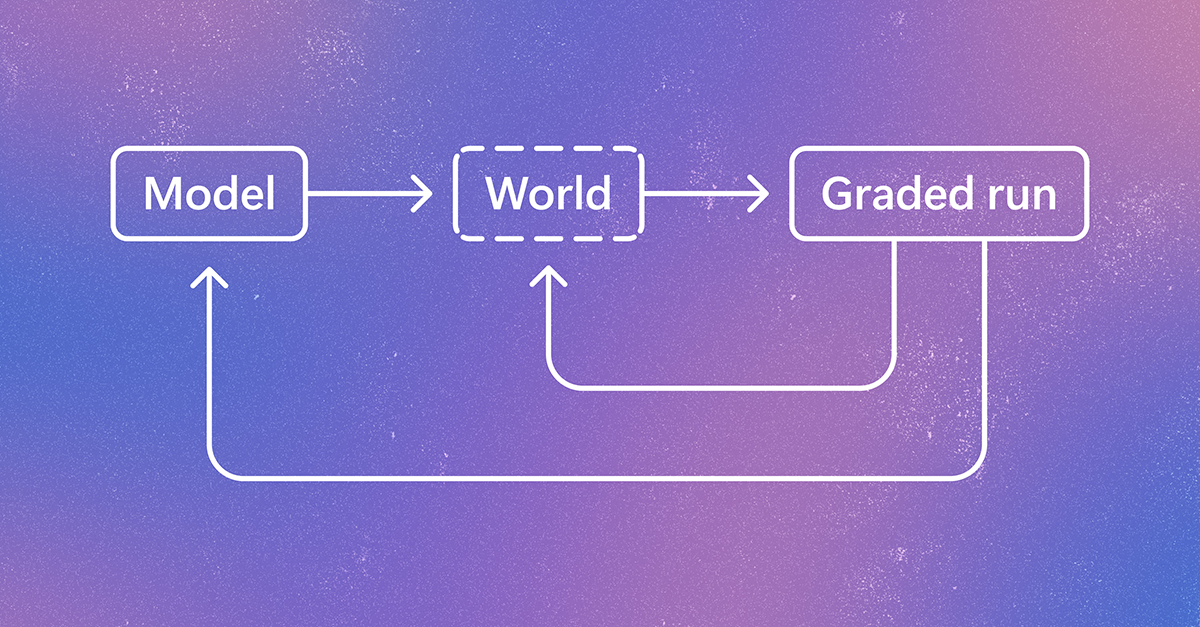
Computer-use AI agents struggle with multi-step workflows like email and customer support. Echoverse trains agents in realistic environments rather than simply providing more training tasks, helping them improve as the tasks, tests, and environments evolve. The post Echoverse: Deep, evolving environments for computer-use agents appeared first on Microsoft Research.
A new computational approach reveals how cells communicate to assemble into tissues. This could accelerate stem cell engineering, improve disease models, and inform therapies.
We use cookies to run the site and, with your consent, for analytics and to show ads.
See our Cookie Policy.